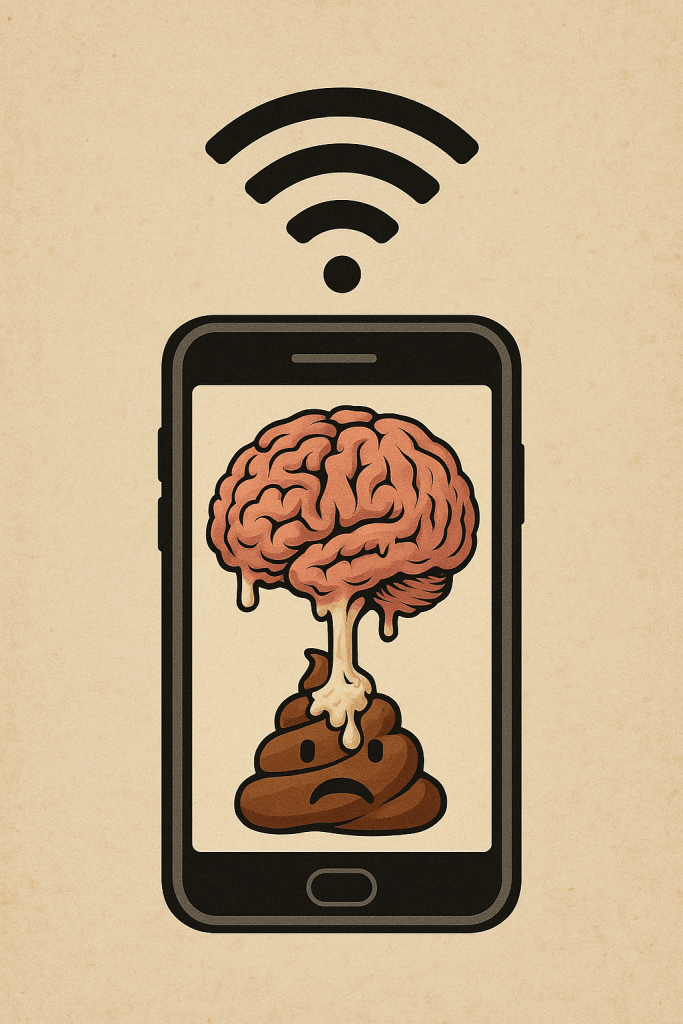
Imagine living a life so empty you spend it listening for a slip, a stutter, a pause, a mispronounced breath from someone you claim to despise without properly vetting.
Waiting for that gotcha moment to post, to prove, to perform your hypocritical outrage for an audience of Pavlov dogs, salivating at the sound of another’s mistake.
Imagine needing someone else’s imperfection to feel your own reflection still matters.
Steel, grease, and human touch, not software updates and warning lights.
If something broke, it was because a bolt stripped or a gasket failed, not because a line of code forgot its purpose.
Back then, a recall meant something mechanical, tangible, a brake line, a seatbelt, a tank that leaked or exploded. You could see the flaw, feel it, fix it with your hands.
The danger was real, but so was the solution. Then came the circuitry.
We traded simplicity for sophistication, and the garage for the update.
Now recalls arrive by the millions, invisible ghosts hidden in the silicon veins of our so-called smart machines.
We were promised progress, and we got recall notices.
Cars that can park themselves, but can’t remember how to stay safe. Engines that whisper in algorithms, but forget the rhythm of combustion.
Every recall is a confession, that our cleverness outran our craftsmanship, that the human touch was more reliable than the human code.
And yet, we still line up for the next model, the next download, the next fix. Because progress, like everything else these days, comes with a warranty and an expiration date.
And so once again, we trade simplicity for complexity, with a side of complication disguised as convenience.
As I approach the midpoint of my life, I find myself trying to balance the pull between machismo and compassion. It’s a quiet fight, but not without passion.
Letting go of the toughness that once defined me as a younger man isn’t easy. The old self resists, clinging to the pride and armor of youth, while the new self whispers of grace and restraint.
Yet, as knowledge and experience accumulate, I realize compassion, just as powerful offers a calmer strength. Forgiveness steadies the waters where pride once stirred them. Maybe that’s why societies have always looked to their elders, they’ve learned that wisdom isn’t loud, and true power isn’t forceful.
Time does not weaken the warrior, it teaches him where the battle truly lies.
I’ve recently had the urge to go to the theater again. My first choice was Frankenstein, but it wasn’t showing anywhere nearby, and the few places that did have it only offered one evening show around 6:30 or 7:30. So I looked up the latest Leonardo DiCaprio film, which also wasn’t playing close by.
Instead, I chose a movie based purely on its poster: Truth and Treason, by a company called Angel Studios. I went in knowing only that it was based on a true story from World War II, a time in history that has always fascinated me.
The film follows a 16-year-old boy in Germany who initially believes in the “motherland prophecy.” A friend secretly gives him an illegal radio, and through BBC broadcasts, his view of Hitler and the war begins to change. He later gets a job as a writer and gains access to banned books locked away in the basement.
Inspired by their ideas, he starts crafting anti-Hitler messages, written in a similar literary style, and types them on small red cards that he and his two friends distribute in mailboxes and on car windshields.
As expected, the authorities soon begin hunting for the author. His writing is so articulate and informed that they assume it must be the work of a university professor. They analyze each typewritten letter, launching a desperate search for the typewriter itself. I’ll leave it there, but it was well done.
It was refreshing to finally see a new film that wasn’t trash. My only complaint, and I realize this is a stylistic choice, is that it’s shot dark with dark tones: browns, tans, and grays. Maybe it’s just age catching up with my eyes, but I found it hard to see at times.
I took my 21-year-old son with me, and he was told me he was tired during the trailers. A dark drama has to be exceptional to keep a tired viewer awake, and this one did. By the end, he told me he really liked the film and told me about the scenes stuck with him.
It’s expensive to go out to the movies these days, and most of the time you leave feeling robbed. Not this time. I felt I got my money’s worth.
What we need more movies like this in today’s film world, more stories like this, well written, well acted, and meaningful. Sometimes having unfamiliar actors in roles helps suspend disbelief and truly sink into the story.
We always had the pop flicks and silly comedies for the teenagers, but at least back in the day, even those were well done.
Somewhere between the paycheck and the bill, a nation exhales. You can almost hear it, the quiet sigh that comes when the math doesn’t work anymore. It’s the sound of exhaustion disguised as normalcy, of people holding up the sky with maxed-out credit cards and second jobs that still don’t pay enough.
It starts with the dollar you earn. Before you even touch it, taxes take their share, federal, state, Social Security, Medicare, leaving you with roughly seventy-five cents on the dollar. Then comes survival: rent, food, gas, insurance, utilities. Every one of them taxed again. By the time you’ve paid for the basics, you’re lucky to have a penny left, and even luckier not to be in debt by the end of the day.
Now, even paying your bills costs money. With auto-pay and online payments, companies charge “convenience fees” for the privilege of paying them, a quiet irony that turns obligation into profit. Every transaction, every necessity, carries its own hidden toll. It’s no wonder so many Americans live in debt, the system is designed to keep it that way.
The pressure today is relentless. Rent, medical insurance, car insurance, groceries, utilities, credit cards, and fuel, each one takes a larger bite out of the average paycheck than the year before. For millions of families, it’s no longer about getting ahead; it’s about keeping the lights on and the balance barely above zero.
Every year, the essentials of life grow more expensive, while pay scales remain frozen in time, lagging behind the real cost of living. Car insurance premiums have jumped by double digits nationwide, groceries have risen over 25% since 2020, and rent in many cities now consumes half or more of a household’s income. Add in medical insurance averaging $1,600 a month for a family, and even a modest lifestyle starts to feel like a luxury.
The cost-of-living crisis isn’t new, but it’s metastasizing. Wages inch forward while inflation, taxes, and corporate margins sprint ahead. Credit card debt just hit a record high, and interest rates ensure it stays there. Families are cutting corners, skipping savings, delaying care, and stretching every dollar until it frays.
And while the working class struggles, the conversation above and below them never changes.
Playing the blame game.
One group’s narrative placing blame on the others instantly without any explanation. Just propaganda.
Meanwhile, every politician enjoys a full ride for life, guaranteed health care, pensions, and perks, all funded by the very taxpayers who can barely afford their own. Somewhere along the line, they forgot who they were supposed to represent.
“They throw pennies at you and take dollars in return,” one economist said of the modern economy, an environment where each minor raise is swallowed by higher premiums, service fees, and taxes disguised as progress. It’s a cycle that rewards compliance, not contribution; endurance, not advancement.
So what is the answer?
Do we have one? Or have we simply accepted this as the price of participation in a system that promises stability but delivers exhaustion?
Perhaps the first step isn’t another patchwork policy or tax credit, but a collective reckoning, a demand that work, dignity, and fairness reconnect.
Until then, Americans will keep working harder to stand still, paying more for less, and wondering how much longer survival can pass for prosperity.
The great irony is that survival has become the new American dream. Not prosperity, not freedom, not even fairness, just survival. The ability to stay one step ahead of collapse.
The absurdity is the USA is still a better place to reside than most countries in the world.
But that doesn’t take away that there is something constantly stirring underneath.
Look at every local liberal campaign ad, the entire message boils down to one thing: hate Trump.
That’s their identity now. That’s their platform.
They’ve already proven to be pro-crime, pro-illegal immigration, pro-sanctuary cities, and pro-trans ideology, the same issues that cost them support in November 2024.
Instead of learning from that and fighting for the US citizen, their campaigns revolve around one message: defeat Trump, defeat MAGA.
No new policies.
No solutions for the economy.
No solutions for the country.
No real plans to help the average US citizen.
So, to everyone constantly posting “anti-Trump” rants, if you truly want to make a difference, explain your policies.
Tell us what you’d do and how you’d do it.
Because “Trump is bad” is not a platform. It’s desperation of a party in chaos without a message.
Yesterday, on my way to the cigar lounge, I realized I had forgotten my iPhone at home. At first, I felt lost as something was missing. A void, an emptiness.
My mind began to race, “How would I communicate? How would I stay connected during the day? What am I missing?” I felt sick.
But once I arrived, I felt something different, as the echo of absence feeling faded away into a freedom.
Seeing familiar faces, shaking hands and sitting down in a leather chair, I watched others locked into their screens scrolling. Is that what it looks like from the outside?
I moved around the room and had real conversations and laughter. I didn’t miss my phone that was 40 miles away.
When I got home, I quickly checked my messages, glanced at TikTok, and that was it. Wow, the world didn’t end today because of the vacancy of me on social media.
Today, with the phone in my hand, I felt lazy and curiosity instantly turned to aggravation, anxiety and irritation, weighed down by the endless noise of politics and pointless chatter by, “Masters of Manufactured Outrage.”
Why do we do this to ourselves?
We are the fish that clings to the hook, even after it’s been pulled free.
The contrast is clear: without it, I was present. With it, I was distracted.
Maybe more of us should leave the phone at home, turn it off, or at least put it in another room. You might find, like I did, that you don’t really miss it and in it’s absence, the fog clears and clarity returns.
Jokes used to divide a room into who laughed and who didn’t.
Why do we care where a comedian performs?
Because outrage needs a stage to generate revenue through reaction and the brainwashed cattle chew it up as usual.
Many times the “controversy” is either drummed up by someone who benefits from the attention or amplified by media outlets that need constant churn. In that sense, it’s less about the comedian and more about keeping the outrage machine alive.
It’s not about comedy. It’s about clicks. About division. About squeezing one more drop of outrage out of a culture already bone-dry.
Comedians used to argue over jokes and punchlines. Now they’re cast as foot soldiers in a never-ending political circus. If they aren’t making you laugh, they’re apparently supposed to make you angry and choose a side.
This isn’t news. It’s advertising for division, sold to us as entertainment.
It’s noise. Manufactured conflict dressed up for another culture war. A cheap stunt.
Another desperate asshole chasing relevance, another crowd fed their daily serving of division.
Culture war obesity, the division becomes the daily national diet.
The buffet of outrage is all you can in-jest, before you become sick and promise never again, yet return the next day to the buffet for another plate of this crap.