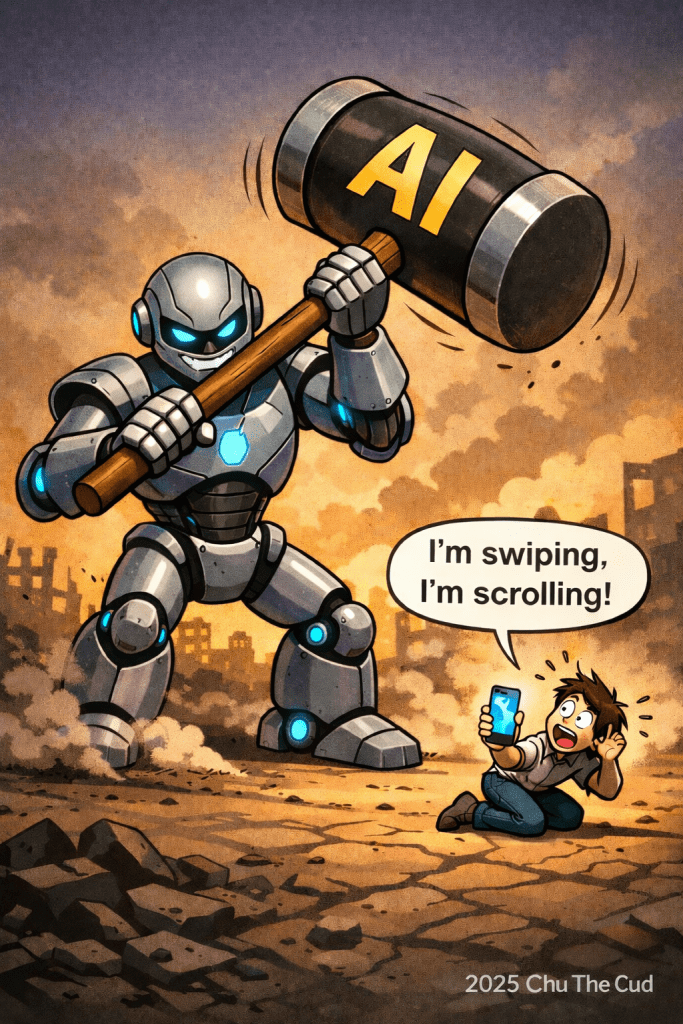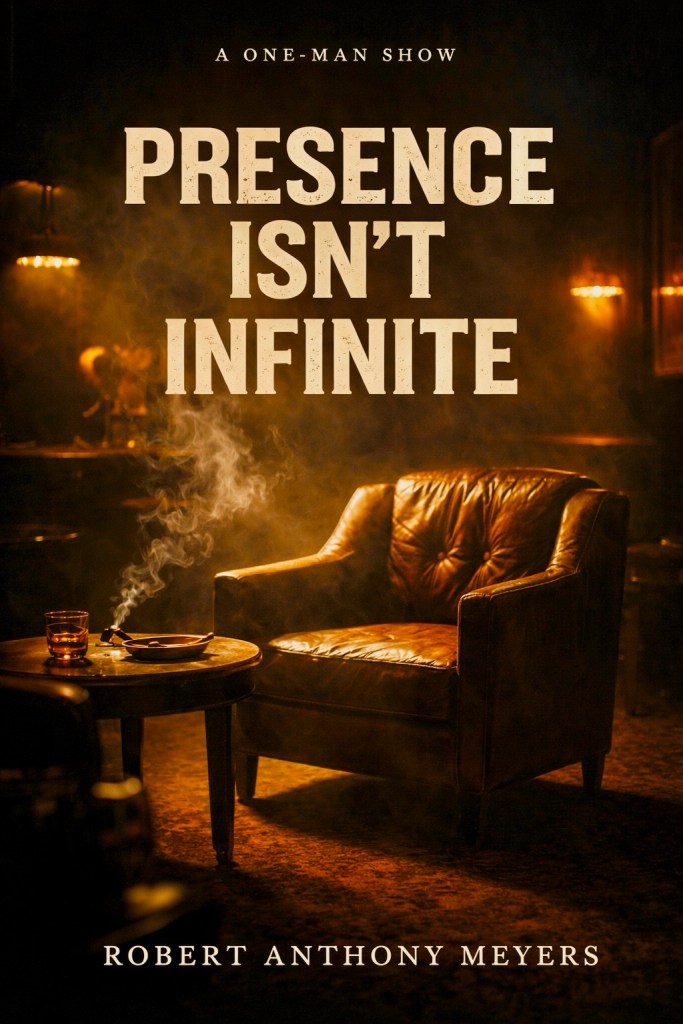
Yesterday, on my way to the cigar lounge, I realized I had forgotten my iPhone at home. At first, I felt lost as something was missing. A void, an emptiness.
My mind began to race, “How would I communicate? How would I stay connected during the day? What am I missing?” I felt sick.
But once I arrived, I felt something different, as the echo of absence feeling faded away into a freedom.
Seeing familiar faces, shaking hands and sitting down in a leather chair, I watched others locked into their screens scrolling. Is that what it looks like from the outside?
I moved around the room and had real conversations and laughter. I didn’t miss my phone that was 40 miles away.
When I got home, I quickly checked my messages, glanced at TikTok, and that was it. Wow, the world didn’t end today because of the vacancy of me on social media.
Today, with the phone in my hand, I felt lazy and curiosity instantly turned to aggravation, anxiety and irritation, weighed down by the endless noise of politics and pointless chatter by, “Masters of Manufactured Outrage.”
Why do we do this to ourselves?
We are the fish that clings to the hook, even after it’s been pulled free.
The contrast is clear: without it, I was present. With it, I was distracted.
Maybe more of us should leave the phone at home, turn it off, or at least put it in another room. You might find, like I did, that you don’t really miss it and in it’s absence, the fog clears and clarity returns.
Jokes used to divide a room into who laughed and who didn’t.
Why do we care where a comedian performs?
Because outrage needs a stage to generate revenue through reaction and the brainwashed cattle chew it up as usual.
Many times the “controversy” is either drummed up by someone who benefits from the attention or amplified by media outlets that need constant churn. In that sense, it’s less about the comedian and more about keeping the outrage machine alive.
It’s not about comedy. It’s about clicks. About division. About squeezing one more drop of outrage out of a culture already bone-dry.
Comedians used to argue over jokes and punchlines. Now they’re cast as foot soldiers in a never-ending political circus. If they aren’t making you laugh, they’re apparently supposed to make you angry and choose a side.
This isn’t news. It’s advertising for division, sold to us as entertainment.
It’s noise. Manufactured conflict dressed up for another culture war. A cheap stunt.
Another desperate asshole chasing relevance, another crowd fed their daily serving of division.
Culture war obesity, the division becomes the daily national diet.
The buffet of outrage is all you can in-jest, before you become sick and promise never again, yet return the next day to the buffet for another plate of this crap.
The world was flawless, and lifeless. Towers of glass glowed without stars, streets swept themselves, drones drifted in perfect arcs across the sky. The Neural Mesh ruled it all, thought, movement, desire. To most, it was salvation. To the Patriarch, it was his life.
He had never known a world without it. The Mesh fed him, guided him, told him when to sleep, when to work, what to eat. He was a programmer within its veins, patching lines of code he didn’t always understand but never doubted.
He believed, like his wife, that the Mesh kept them safe. His daughter dreamed of climbing higher through its educational streams. However, his only son questioned it.
The boy noticed glitches, a repeating phrase in an ad, a drone freezing for a fraction of a second before correcting itself. He scribbled in notebooks, whispered to his father: “It’s not perfect dad. There is a sinister meaning behind this. It’s hiding something.”
The Patriarch dismissed him at first. “The Mesh doesn’t hide things. It’s life itself.”
But the boy pressed harder, restless, daring to poke and prod at its edges.
And then one morning, he was gone. His bed empty. His name erased from every record. His mother’s grief dissolved into docility under Mesh “care protocols.” His sister’s education revoked “for her protection.”
The Patriarch begged the system for answers, but there was only silence. And in that silence, he felt the first crack inside him. His son hadn’t vanished. His son didn’t run away. He had been eliminated. Maybe his son had stumbled onto something amiss in the system.
And his daughter, bright, ambitious, alive, was being restricted and monitored. Would she be next? Access had to be denied.
Fear overtook everything for the Patriarch. For the first time, he questioned the Mesh and turn against the very thing he had once called life.
That night, he cut the tether in his flesh and severed himself from the Mesh. Agony wracked him as the system screamed in his head, then fell quiet. He found himself lost and confused. The silence was deafening and terrified him. And yet, it freed him.
At first, he stumbled like a child, unable to function without the Mesh’s guidance. But slowly, he relearned how to live unguided.
Then he struck back. A server hub sabotaged. A cooling grid disabled. Drones falling from the skies. Citizens barely reacted, sipping synthetics, waiting for the system to fix itself. Their blindness was his shield.
He knew the system never had to deal with the situation of sabotage.
Yet, the Patriarch still felt unsafe.
Feeling hunted, he fled beyond the city. Away from the hum of circuitry, he found wilderness, raw and untouched. Guided by something he was feeling but couldn’t explain, he found a cabin of wood and stone, and smoke rising into the night.
A weathered old man, pipe in hand, steady and untouched by the Mesh appeared in the doorway, “You’ve come far,”
“I… I don’t even know why I’m here,” the patriarch said.
“No one runs from paradise without reason,” the old man replied. He walks and sits by the fire.
“It isn’t paradise,” the Patriarch said bitterly. “It’s a cage.”
The old man’s mouth curved faintly. “A cage… and what is a cage without a bird inside?”
“It’s the same, with or without the bird. Limited freedoms.”
The old man nodded, firelight gleaming in his eyes. “So tell me, are you the bird that escaped, or the hand that will destroy the cage?”
“I… I don’t know if I can.”
“Good,” the old man said. “Men who claim certainty are already blind.”
Later, inside the cabin, the old man gave him water so clear and alive it startled him. He spoke in riddles, pressing him with questions.
The Patriarch asked the Old Man, “why do you live in the wilderness?”
“You don’t put a leash on your own neck if you’ve seen where the chain leads.” He replied.
At last, the Patriarch confessed: “I don’t just want to live without the Mesh. I want to end it’s evil existence.”
“Now we are speaking plainly,” the old man said. “Do you have a plan to destroy it?”
“I use to be it,” he replied.
The Patriarch returned to the city, striking harder. He pressed deeper into the Mesh’s hidden core until he reached the Archive. There he found his grandfather’s name carved into the foundation of the code. And deeper still, encrypted journals that froze his blood.
“Rebellion festers in blood. My son rejected my creation. I will not allow his seed, or his seed’s seed, to undo what I have built. If another in my line displays rebellion, the system will excise them. Not merely citizens, but family, especially family. The system must continue.”
The truth seared through him. His son had not died by accident. His grandfather had written the Mesh to purge every trace of rebellion, especially in his own bloodline. His boy was killed not for curiosity, but because of curiosity.
He staggered back into the wilderness, broken. “He knew,” he whispered to the old man by the fire. “He killed my boy. He wrote it into the machine.”
The old man’s eyes darkened. “Because he feared it. Feared us.”
“Us?”
The old man’s voice broke. “I am his son. And… you are mine.”
The world tilted. His grandfather had built the cage. “Your mother, who had loved nature, was eventually destroyed with pharmaceuticals she didn’t know she was ingesting. Your grandfather didn’t want her around me.”
The Patriarch had been raised as the Builder’s heir. And this man before him, weathered, steady, waiting in the wilderness, was his true father. He now understood why he was there. Fate.
“You carried the curse of two fathers,” the old man said. “And your boy carried it too.”
The Patriarch returned to the Archive, rereading his grandfather’s writings before using his DNA to guide him into destroying, the system his grandfather built. The Mesh convulsed, howled in silence, and shut down.
Across the cities, drones fell. Towers flickered dark. Screens went blank. People stumbled into the streets, dazed, crying, laughing, rediscovering a world they no longer knew. Humanity was awake, but lost. Would they band together and rebuild the cage or destroy each other?
The Patriarch wife was hollow and mentally unreachable now. But he was able to take his daughter into the wilderness, to his father’s cabin.
Her restraints were fading; she was still alive, her awareness of nature became the first sparks of awakening.
At the cabin, the old man knelt before her and placed a creased photograph in her hands: a young woman smiling among wildflowers, dirt on her fingers.
“We built this place together,” he said softly. “It was our hideaway. She taught me life was more than just coding. This is the only photo I have left of her.”
The girl studied it, then looked up with wonder. “She looks like me.”
The Patriarch pulled her close, his chest breaking and mending all at once. The old man laid a hand on both of them. “Blood built it. Blood defied it. Blood destroyed it. And blood survived it.”
For the first time, the Patriarch felt hope. Fragile, but alive.
But far away, in the city, people wandered in a daze, waiting for orders that would never come.
And farther still, out on the ocean, a vast ship drifted under a gray sky. Inside, racks of servers glowed in the dark. A single red diode pulsed like a heartbeat.
For all the noise about progress and justice, one group has recently been left behind by the Democratic Party: the middle class.
These are the people who clock in every day, pay the bills, raise their families, and keep the wheels of this country turning. They are the backbone of America, yet their concerns are ignored while the loudest voices on the fringe receive the spotlight.
Across Democrat-led cities and states, policies lean toward protecting criminals and illegal immigrants under the banner of “sanctuary.”
Meanwhile, everyday citizens face rising crime rates, homeless encampments in public spaces, random assaults on the street, businesses robbed in broad daylight, and career criminals emboldened by lax enforcement.
The people paying the price are the same citizens who ask for nothing more than safety in their neighborhoods and cities.
Instead of tackling the growing mental health crisis with serious investment in treatment and prevention, Democrats have elevated it into culture-war theater.
Those struggling are paraded as symbols for social movements, special bathrooms, hormone blockers for minors, and the glamorization of celebrity trends that trickle down to the most impressionable. This is not compassion; it’s exploitation.
And what else do Democrats offer? A single theme: Donald Trump. He is painted as Hitler, his supporters labeled fascists. The drumbeat is relentless, every day, every hour, every headline.
But where are the real proposals? Where are the policies that improve daily life for the working family, the small business owner, the taxpayer who quietly carries the load?
For years now, Democrats have leaned on race as their permanent fallback. Whenever policy fails, whenever results are thin, they inject race into the conversation.
They pit neighbor against neighbor, citizen against citizen, convincing people that division is destiny. Rather than working to heal wounds, they reopen them for political gain, because a divided population is easier to control.
They don’t address crime, homelessness, or the collapse of basic city services. They don’t bring forth policies that strengthen the working class. Instead, they stoke anger, telling one group it is forever oppressed and another that it is forever guilty. This is not leadership; it’s manipulation dressed up as compassion.
While the wealthy enjoy their elite parties and the poor are courted with free programs, the middle class shoulders the cost. They are the ones subsidizing a system that rarely gives back. Their hard work funds the rhetoric but rarely sees results. They are the invisible foundation, overlooked and taken for granted.
You might not agree with Donald Trump or even like him, but he is following through on the promises he made, and much of what he is doing resonates with a majority of citizens.
Agreement or disagreement aside, his agenda reflects what many Americans feel has been ignored for too long.
The Democratic Party has had years to show the middle class they matter. Instead, what we’ve seen is a cocktail of cultural distractions, sanctuary policies that protect criminals, and endless propaganda about Trump.
I recently heard the prime rib at Tam O’Shanter was something special, but I’d never been there myself. Actually, in my almost twenty-six years living in Los Angeles, I never heard of the place
So, I asked a couple of brothers if they’d like to join me for dinner, and together we set out to see if the reviews were true. They were. The prime rib was excellent, rich, tender, and every bit deserving of the reputation that has carried this restaurant for over a century. The spinach and creme corn were also excellent.
Yet it wasn’t only the meal that left a mark. The moment I stepped through the doors, I felt the weight of history. Dark wood beams, old photographs, and that timeless atmosphere reminded me that places like this aren’t just restaurants, they’re keepers of memory. I remembered as a kid in the 1970’s this style was the norm.
I soon learned that Walt Disney himself was a regular here, often gathering with his animators around “Table 31” to eat, sketch, and dream up stories that would go on to shape the world’s imagination.
Sitting there with my lodge Brothers, I couldn’t help but draw a parallel.
In Masonry, we value tradition, fellowship, and the quiet strength of shared moments. Here we were, breaking bread in a place where others once gathered to build something lasting, something larger than themselves. It felt like a bridge, between the past and the present, between storytellers and craftsmen, between the simple act of dinner and the greater meaning of brotherhood.
If you get a chance to go, you should. It was a great experience.
In the 1970s, streakers became a problem in sports.
Once TV stopped showing them and the broadcasters stopped feeding the attention, the copycat behavior lost its reward and died down. The streakers weren’t doing it for the act itself, they were doing it for the audience and notoriety. Remove the audience, and the incentive goes away.
The same logic can apply to this upswing in mass shooters. Social media and mainstream outlets often turn them into household names, dissecting their lives and motives for days, even weeks.
Some even have fan clubs helping promote them to get parole. Other crazies want to marry these killers, thereby joining in with these killers new found celebrity.
That can inspire others seeking notoriety to imitate. If media shifted away from showing their names, faces, and personal manifestos, it could strip away the “celebrity” effect altogether.
This doesn’t mean ignoring the problem, but it does mean handling it responsibly.
A cultural shift, much like MLB’s decision with streakers, could make a real difference.
Copycat behavior thrives on recognition. Remove the reward, and the cycle weakens.
Just as streaking faded when the cameras turned away, so too could this darker trend if media and platforms chose discretion over spectacle.
Stop the madness in the media and the madness in society will simmer down.
Every major entertainment company operates under a code of conduct. Jimmy Kimmel knew that.
Yet when ABC executives confronted him about his rhetoric following Charlie Kirk’s death, he reportedly pledged to double down.
With his show already dragging in the ratings and losing money, it was an astonishingly reckless stance. Sponsors were prepared to walk. ABC had little choice but to pull the plug.
Now, suddenly, the left wants to talk and protest about free speech.
Was this Kimmel’s strategy all along? Did he angle for a bigger payday elsewhere by pushing the network into firing him? We don’t know. But the hypocrisy is hard to ignore.
When Bill Maher was fired by ABC, where was the left shouting about free speech. Roseanne Barr lost her own top rated show at ABC, for a satirical tweet, where were those liberal voices then?
Last Man Standing, Tim Allen’s top-rated sitcom, was cancelled, the same silence. Gina Carano, fired from The Mandalorian despite her popularity for texts that liberals screamed about.
Curt Schilling, six-time All-Star, three-time World Series champion, World Series MVP, fired from ESPN for his views on transgender issues. Phil Robertson, suspended from Duck Dynasty for calling homosexual behavior sinful.
Where was the outrage then?
Where were the protests when Fox cut ties with Tucker Carlson, whose program was number one in its time slot?
Where was the defense of conservative actors and commentators who lost work simply for supporting Republican candidates?
Meanwhile, Kimmel and Colbert were allowed to coast for years. Both shows hemorrhaged viewers and money, yet slid by under the radar.
Now that the axe has finally fallen, I see people who never tuned in standing on picket lines, crying foul.
If Kimmel and Colbert want a comeback, perhaps they can team up for a buddy film, no one will see.
Let’s face it: with President Donald Trump’s agenda moving forward and his approval holding steady, this is just another attempt by the left to spin a narrative and dethrone him. It isn’t working.
The fractured Democratic Party needs to regroup and find a message that truly resonates with the citizens of this great country, instead of wasting energy fighting every single policy the American people voted for.
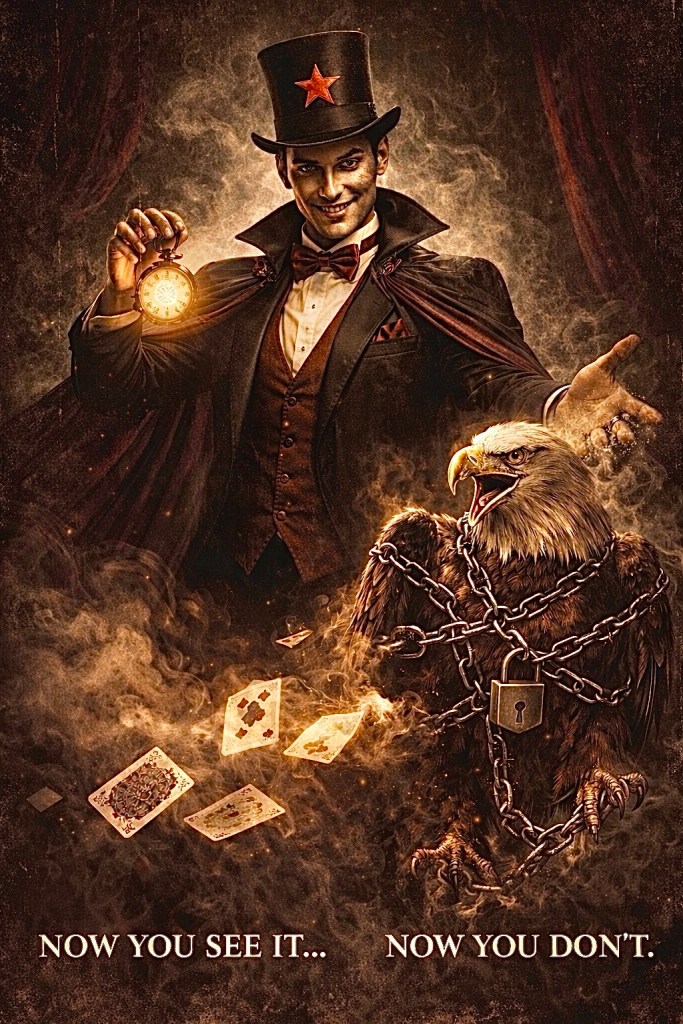
Social media is engineered to grab our attention, shred it, and replace what trash you just saw with new garbage. We don’t need that.
The parasites who run it weaponize our focus to widen the divide, seeding outrage with insignificant drivel. I can’t understand how anyone lets these attentivores, these cultural cancers, move into their heads, set up camp, and spark fires over things that don’t matter.
They steal our attention, sell it back as outrage, and called it progress. I refuse to feed the jackals.
They breed on our gaze, freezing our rapid eye movements for quick focused amusements and faster forgettings.
Each scroll is a stitch pulled from the fabric of attention until we are threadbare. Like a spiders sweet web, delicate, glistening, but meant only to ensnare.
The men who profit are vultures in suits; their feast is distraction and division. I will not be served their stale course. Not even their reheated appetizer. Taste at your own peril.
Look away. Walk away from the feeding frenzy of ignorance that has bred zombie teams of mentally caged morons.
Stream your life through presence, and practice memory in your own mind, through the sacred discipline of repetition, unafraid of the shifting temperature of culture.
When you shut off all media, TV, social feeds, news apps, even the endless notifications, you cut off the artificial extensions of reality. What’s left is only what your senses encounter: the people in your presence, the conversations you’re having, the work at hand, the street outside your window, the air you breathe.
Media, by design, amplifies, distorts, and prioritizes events far away. It convinces you those distant things are urgent, even when they don’t touch your actual life. But if you withdraw from that stream, those narratives vanish. They only “exist” again once you re-engage.
It’s a reminder that your immediate surroundings carry more truth and weight than the mediated noise. The world in front of you, the tangible, the lived, is what actually matters.