At one time, we washed our clothes by hand. We spent hours preparing meals, cleaning our homes, and performing tasks that technology eventually made easier.
We invented machines to give ourselves more time.
But what did we do with that time?
We filled it with more distractions, more demands, more consumption, and more screens.
We invented computers to serve humanity, but increasingly, humanity organizes its existence around computers.
The internet accelerated the transformation. Smartphones made it nearly impossible to escape.
What began as a tool to make life easier gradually became a place where people spend much of their lives.
The screen was supposed to be a window into the world. For many, it has become a substitute for the world itself.
We watch strangers eat, travel, argue, fall in love, and experience things we could be experiencing ourselves.
We have become spectators of existence rather than participants in it.
Technology promised us freedom from labor. Yet somehow, we became increasingly occupied.
And therein lies the irony.
We spent generations inventing ways to save time, only to invent new ways to waste it.
Life didn’t become less interesting. We became less interested in living it.
Perhaps the question isn’t whether technology has improved our lives.
Perhaps the question is whether we’ve forgotten what we were saving all that time for.
The Boston Red Sox got swept by the Yankees in the Wild Card Series.
It hurt.
But I’m not going to let two games erase what happened over the previous five months.
When Chad Tracy was called up from Triple-A Worcester to replace Alex Cora, he inherited a team sitting at 10–17. The Red Sox were going nowhere.
Then something happened.
Tracy brought energy. Young players came up from the minors. Kids who weren’t supposed to be carrying a Major League team suddenly were. And somehow, this collection of veterans, rookies and Triple-A call-ups turned a miserable season into one hell of a ride.
They made baseball exciting again.
Then came October.
And Chad Tracy looked like what he is: a first-year Major League manager experiencing postseason baseball for the first time.
Against the Yankees, his quick hook with his starting pitchers hurt.
In Game 1 , Tracy went to the hook early.
Sonny Gray was pulled with two outs in the fifth after only 70 pitches. Gray wanted the baseball. He believed he should have been trusted to keep pitching.
In Game 2, Payton Tolle was pulled with two outs in the fifth after 83 pitches. Boston was down only 1–0. Erik Miller came in, and the Yankees immediately made Tracy pay for the decision.
Again, Tracy turned to the bullpen.
Again, it didn’t work.
Those decisions deserve criticism.
But they also deserve perspective.
Across the field was Aaron Boone, a manager with years of Major League experience and a Yankees organization that has never been afraid to spend money to compete. Right now, the Yankees simply have the better team.
That’s baseball.
What interests me now isn’t what Chad Tracy did wrong in his first postseason.
It’s what he learned from it.
Chad Tracy took over a team that looked dead and helped get it to October. He did it with a roster that, at times, seemed like half of Worcester had been given directions to Fenway Park.
And it was exciting as hell to watch.
Now Tracy has something he didn’t have when he walked into that Major League clubhouse:
Experience.
A Major League season.
A pennant race.
October baseball.
And the sting of getting swept by the New York Yankees.
I’ll take that into next year.
Because sometimes the most valuable thing a young manager can carry into the following season isn’t a trophy.
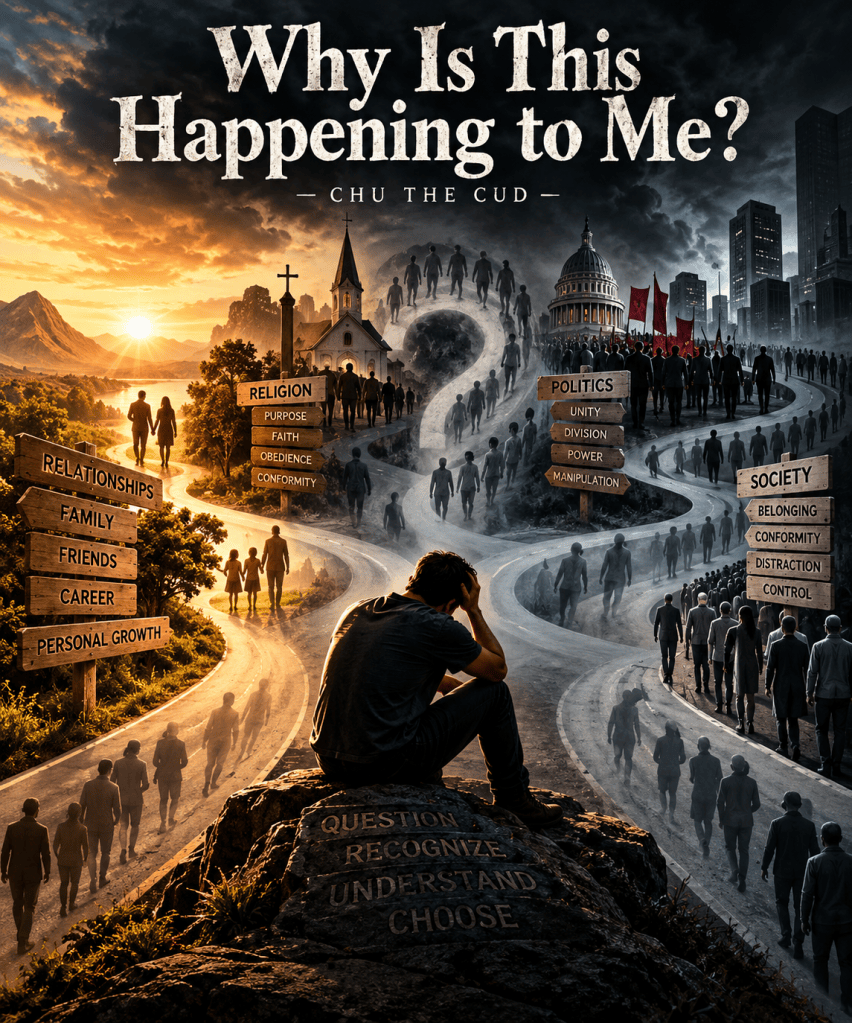
Life is a series of patterns. Some we inherit, some we create, and others we blindly follow without ever questioning why.
Relationships, religion, politics, family, and society all operate through patterns. Some teach us integrity, discipline, and responsibility. Others demand obedience, reward conformity, and discourage independent thought.
Yet when things go wrong, our first reaction is often, “Why is this happening to me?” Perhaps the better question is, “Why does this keep happening to me?”
How many times do we repeat the same mistakes, trust the same behavior, or defend beliefs we’ve never bothered to question? We change the people, change the circumstances, and somehow end up with the same results. At what point do we stop blaming coincidence and recognize the pattern?
Religion can provide purpose or demand obedience. Politics can unite or divide. Relationships can strengthen us or destroy us. And society can convince us that following the crowd is somehow the equivalent of thinking for ourselves.
But just because millions of people follow a pattern doesn’t make it right. And standing against it doesn’t automatically make you right either.
Nature follows patterns. Human beings have the ability to recognize, question, and sometimes change them.
Not everything that happens to us is our doing. But what we do once we recognize a pattern is where personal responsibility begins.
Seeing patterns is awareness. Recognizing them is intelligence. Knowing when to join them, challenge them, or walk away is wisdom. Perhaps the most dangerous pattern of all is believing we’re independent thinkers while blindly following someone else’s ideas.
So the next time you ask, “Why is this happening to me?” consider another question. Am I recognizing life’s patterns, or am I simply repeating them?
For decades, the traditional arrangement was simple: the man went to work and financially supported the family, while the woman often stayed home and supported the family in a different way, raising the children, managing the household, taking them to school, activities, doctors, practices, and everything in between.
That work had real value, even though it didn’t come with a paycheck.
When a marriage ended, the law recognized that economic imbalance through things like spousal support, because one spouse had sacrificed earning potential to support the family.
Women fought for equality, equal rights, equal treatment, and equal pay. Fair enough.
But equality has to work both ways.
Today, there are fathers who make the same choice women historically made. They work part-time or earn less because they choose to be the parent who gets the kids to school, picks them up, takes them to sports, goes to the park or beach, handles appointments, and is there for the day-to-day raising of the children.
If that marriage ends and the woman is now the primary breadwinner, she may become the spouse ordered to provide support.
And if we believe the principle was legitimate when the roles were reversed, it shouldn’t suddenly become outrageous when the man is the one who sacrificed income to raise the children.
You can’t demand equality when it benefits you and reject the same principle when the circumstances are reversed.
Many people say they do not want data centers in their communities but they are often the same people who depend on them every day.
Data centers power the phones in our pockets, the navigation and safety features in our cars, streaming services, social media, cloud storage, online banking, medical records, scientific research, weather forecasting, and the computing behind advances in medicine and technology.
That does not mean communities should accept every proposal without question. Data centers should be built responsibly, with real attention to electricity demand, water use, noise, emissions, land use, and local benefits. But we cannot demand unlimited digital convenience while pretending the physical infrastructure behind it should exist somewhere else, out of sight and out of mind.
If we want the benefits of a connected, data-driven world, we also have to be honest about what makes that world possible.
Yet somehow, the story has shifted away from the three little children who lost their lives and toward the women who sat on the jury.
Why is the jury room becoming the real courtroom, where the battle over innocence and guilt was actually fought?
Three white women came forward to publicly condemn the lone holdout juror, the one man who refused to join their collective decision. After receiving backlash, another juror, a man, was brought forward to criticize him as well.
And I have to ask:
What happened to the three babies?
Where is the outrage for them?
Where is the focus on the children who were actually murdered?
Instead, we are watching a media narrative develop around the women who wanted the same verdict, the juror who wouldn’t give it to them, and the battle over what happened inside that jury room.
The mother becomes the victim.
The husband is suggested as the real culprit.
The lone juror becomes the villain for refusing to go along.
And the three children, the three innocent lives at the center of this entire case, become almost an afterthought.
Maybe that’s the uncomfortable question nobody wants to ask:
Were three murdered children simply not controversial enough to keep the ratings going?
Because apparently, the jury-room conflict is more compelling than the graves.
And if there is a broader political movement trying to use this case to undermine confidence in the jury system, that deserves scrutiny too.
And the DSA is sitting back and licking their chops.
As a child, I was always reaching for the next thing.
I learned to roll over, then crawl, then pull myself up, stand, walk, and eventually run.
Nobody had to tell me to strive.
Growth was instinctive.
I was always interested in what came next.
That continued throughout my life. I came to Los Angeles to pursue Hollywood, then stepped away from that career to raise my three children. For years, life gave me a reason to keep moving.
Then my children grew up.
The apartment became quieter, and I began thinking about what happens when the things that once gave your life momentum and resilience aren’t there anymore.
Maybe that’s when we’re vulnerable to the seduction of comfort.
We start looking backward.
I used to be stronger. Faster. More agile. I used to have more energy. My children used to be home.
But the past will always win that comparison.
So I’ve started asking a different question:
How do I fill the void left?
I may not be able to do everything I once did. That’s okay.
I can walk, write, create, learn and play music. I can explore.
I can still reach.
At sixty, maybe the goal isn’t to become who I was at twenty.
Maybe it’s to realize who I was and discover something worth becoming now.
Because as long as I’m still reaching for something beyond me, an experience once removed…
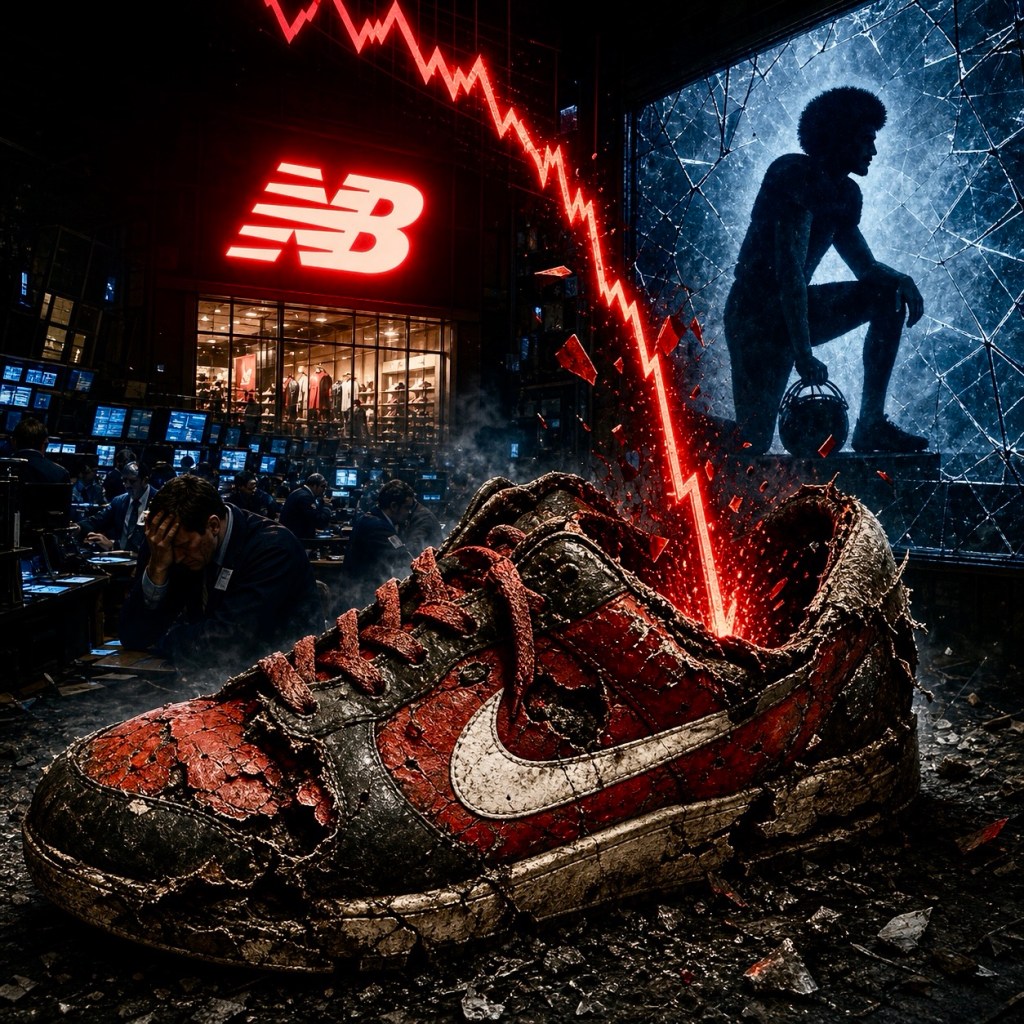
Nike Gets Booted From the S&P 100 After Losing Hundreds of Billions in Market Value.
Being removed from the S&P 100 is a significant warning sign, but it isn’t the same thing as being kicked out of the S&P 500.
Nike’s stock has suffered a massive decline from its 2021 peak.
Nike’s own 2026 annual report shows NKE down 63.55% over the five-year period through May 31, 2026, while the S&P 500 gained 93.80%.
Revenue peaked around $51.4 billion in fiscal 2024 before falling to $46.3 billion in 2025 and $46.4 billion in 2026.
Nike has faced stronger competition from brands such as Hoka, On and New Balance, weakness in China, and criticism of its product/retail strategy.
Sometimes a wound doesn’t heal and takes years to fester.
On the Colin Kaepernick controversy, Nike said:
“We would rather alienate some customers if it strengthens our relationship with younger, urban and culturally progressive consumers.”
Immediately after Nike announced Kaepernick as the face of its 2018 campaign, Morning Consult measured a dramatic deterioration in Nike’s favorability: its net favorability reportedly fell from +69 to +35. The backlash included people publicly destroying Nike merchandise and calls for boycotts.
Sometimes an injury doesn’t look serious when it happens. You walk away, the adrenaline wears off, and you think you’re fine.
Then, years later, you realize the injury never really healed.
That’s how I look at Nike and Colin Kaepernick.
I’m not arguing that Kaepernick immediately destroyed Nike. Quite the opposite, the campaign initially helped Nike. Sales went up, the brand received enormous attention, and Nike appeared to have made a very successful marketing decision.
But maybe we’re looking at the wrong timeline.
What if Kaepernick was the injury, not the immediate cause of death, but the beginning of a wound that Nike never recognized?
Nike had spent generations becoming one of the most recognizable brands in America. Then it took a very public political and cultural position.
Some consumers loved it.
Others didn’t.
And some of those people may have simply walked away.
The younger generation eventually moved toward newer brands like Hoka, On and New Balance. Meanwhile, some of the older generation who had grown up wearing Nike may have stopped identifying with the brand after Kaepernick, and never came back.
That’s the part we can’t easily measure.
You can’t look at a balance sheet and find a line that says:
“Customers we permanently alienated in 2018.”
But losing a customer isn’t always an immediate event. Sometimes it’s a slow leak.
A customer doesn’t boycott you. They simply buy something else next time.
Then again.
And again.
Until one day you look around and realize an entire generation has moved on.
So no, I wouldn’t say Colin Kaepernick “killed Nike.”
I’d say something more provocative:
Kaepernick may have given Nike an injury that didn’t look fatal at first, but over time, the wound may have contributed to the brand losing customers it never got back.
And perhaps Nike’s biggest mistake wasn’t taking a political position.
It was underestimating how long the consequences of that position might last.