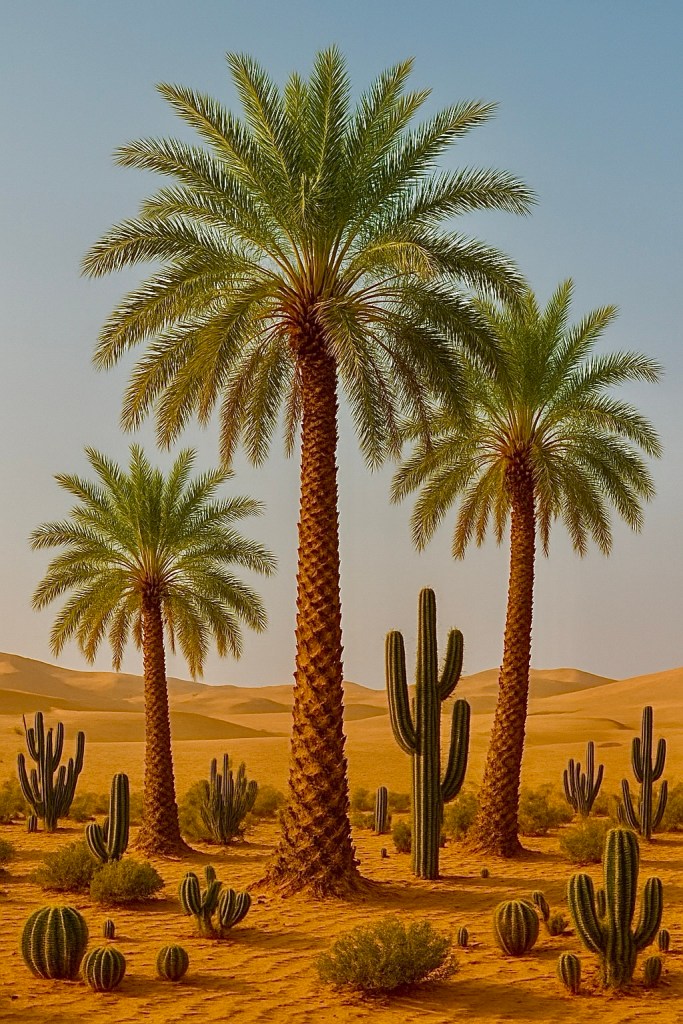
Palm trees that grow in the desert, their roots tangled in shifting sands, drinking from wells the eye cannot see, stretching upward with a faith that heat cannot break.
Each frond whispers a defiance, green against the repetition of dust, shade against the tyranny of light, a soft, living hymn where silence reigns.
They are not custom, yet they endure, a contradiction sculpted by wind and sun.
Out of place, perhaps, but not without purpose.
They remind us that survival is not always comfort, that beauty is not always harmony, and that to stand where nothing else dares…
A young man was murdered, assassinated, for nothing more than speaking, for daring to converse with those who disagreed.
He leaves behind a wife and two young children, yet instead of mourning, many chose to celebrate his death. Social media filled with professional voices, teachers, doctors, engineers and others mocking his life, twisting his words, and applauding the violence.
I cannot live in that noise. I cannot debate with those who strip tragedy of its humanity. Every time I see such posts, I feel the pull to comment, but I choose not to. I delete. I unfollow. I step away.
This is not apathy. This is self-preservation. This is clarity. I will not give my energy to those who thrive on cruelty.
Instead, I will honor the man’s humanity in silence. I will focus on what is real and close, family, creation, growth.
I will stay positive, because the world has enough shadows without me feeding them.
Not everything demands engagement. Sometimes the strongest response is to walk away.
I honor what once protected me, and I bless what now frees me.
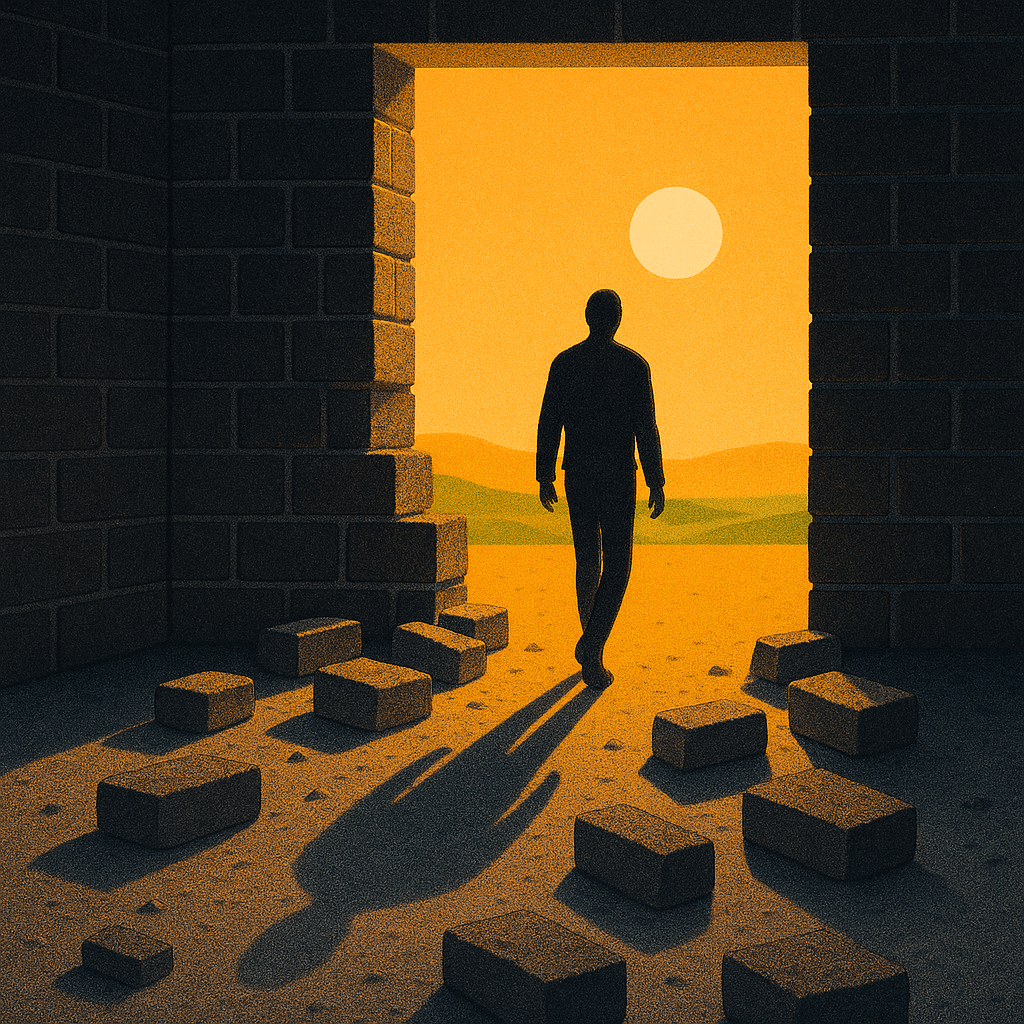
So, brick by brick, I begin the work of independence.
Each brick released, not wasted in anger, but representing a person who was an essential part of my life.
Not rubble, not debris, but stones of memory and meaning.
Wall built sheltering me from storms, and gave me shape to who I am.
I honor them, as they fall to open up possibilities and their absence does not leave emptiness, but opens a passage to new experiences, a horizon beyond the wall.
Each step forward carries their knowledge or understanding, their presence in my silence, their strength in my shadows.
I honor what once protected me, and I bless what now frees me.
So, brick by brick, I begin the work of unmaking.
Not reckless demolition, but careful, steady hands, transforming barriers into passageways. I adapt, I grow, I open.
The future waits, and this time, I walk toward it, without fear.
The path is now mine, but my footing and foundation was poured by them.
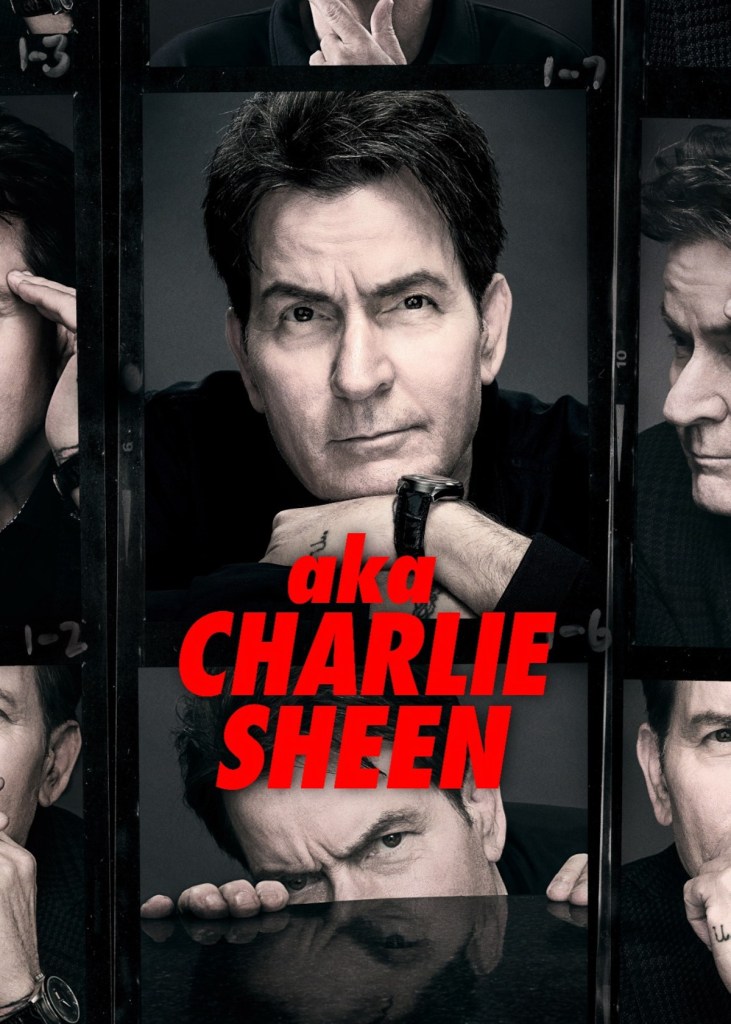
I just finished watching the Charlie Sheen documentary, aka Charlie Sheen on Netflix, and I couldn’t help but wonder what his real motivation was for doing it.
It starts with lots of super 8 footage of his childhood and little films he made with family and friends. Comparing the violence of his dad’s films to the violence on their super 8 movies. It went on too long.
The supposed “big reveal” about having slept with men felt more like a marketing hook than a genuine confession, something to draw attention and spike viewership for a story that otherwise fell flat.
And that hook, was in the last part of the documentary and just a blip. No details. No stories. I was wondering if this is where he contracted HIV. But nothing.
Even his own father, Martin Sheen, and brother, Emilio Estevez, chose not to participate, after watching some of the footage, which speaks volumes. However, his crack dealer and cooker gets to fill some airtime in the doc.
Instead, the film relied mainly on the presence of two of his friends, Sean Penn, Terry Todd and his co-star on two and a half men John Cryer.
Digging a little deeper, it became clearer why Charlie agreed to the project: money. At one point, he was worth over $150 million thanks to his run on Two and a Half Men, one of the most successful sitcoms of its era.
Now only worth $3 million after years of reckless spending, addiction, lawsuits, and headline-making scandals eroded his fortune.
Now, with his net worth drastically diminished, this documentary looks less like a career-defining reflection and more like a cash grab a way to monetize what’s left of his notoriety.
Instead of a redemption arc, what we got was a hollow reminder of wasted potential, proof that even the biggest stars can burn through their empire and end up selling their scandals just to keep the lights on.
Was waiting for a bombshell but just clips that have been shown millions of times.
We’ve seen it all before, over and over. Nothing new here to see folks. Just another Hollywood documentary of a spoil rich celebrity, getting everything and tossing it all away.
On September 10, 2025, Charlie Kirk, conservative activist, founder of Turning Point USA, husband, and father of two young children, was shot in the neck and killed while speaking at Utah Valley University.
He was only 31. The shooter fired from a building roughly 200 yards away, and despite early reports, no suspect is currently in custody. Federal and local law enforcement, including the FBI and ATF, are investigating.
Whatever one’s politics or faith, this is a tragedy. I may not have agreed with everything Kirk said, but disagreement is what makes freedom of speech so powerful, and so vital.
To live in a country where debate is, where ideas can clash without violence, is supposed to be the very core of American democracy.
The divisions in this nation run deep, not just between Democrats and Republicans, but within each party.
Yet the answer cannot be violence. It cannot be elevating those who act out of hatred or instability into martyrs or excuses.
We need to stop pretending that violent acts born of rage or untreated mental illness are somehow courageous. They’re not, they’re destructive, and they tear at the very fabric of our communities.
We also can’t ignore the reality of daily violence, whether it’s gangs in our cities, political radicals, or individuals consumed by hate. Respect for life and for opposing views has to return to the center of our culture.
That means taking responsibility for our own actions, rejecting the blame game, and holding ourselves accountable and our leaders, to a higher standard of respect and civility.
This country is still the greatest in the world, but right now, it’s veering off course.
A man like Charlie Kirk should not be assassinated for his opinions. My own friends hold a wide range of political and philosophical views, we debate, we disagree, but I would never wish harm on them. That is what makes life in a free society meaningful.
If we truly value freedom, then we must stop treating political opponents as enemies and start treating them as fellow citizens again.
The alternative is chaos that will lead to our own ruin.
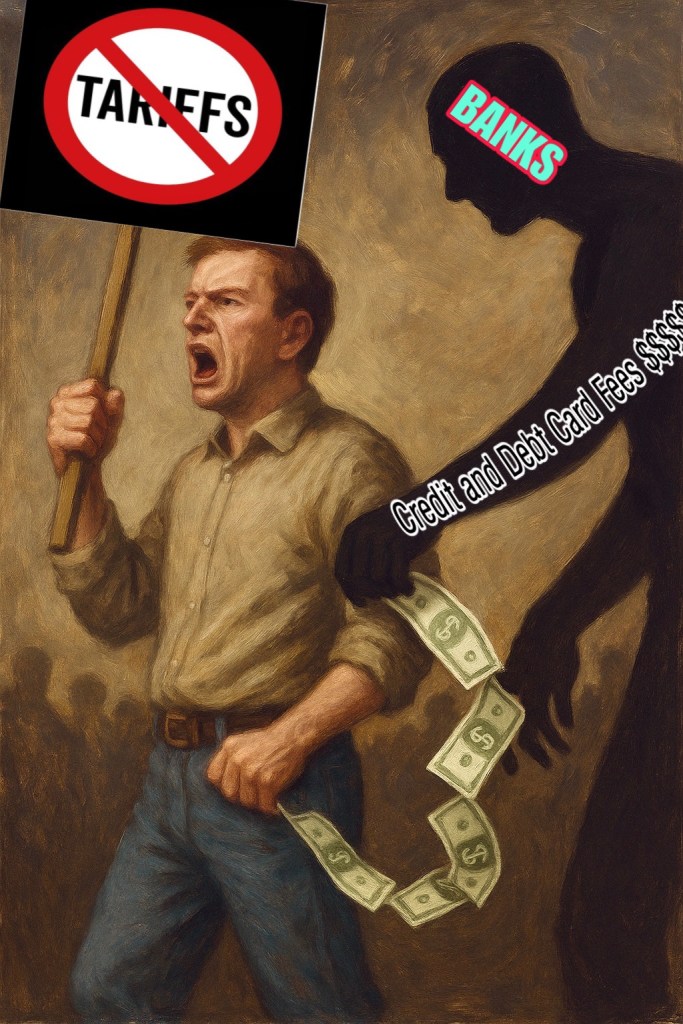
It cracks me up watching people lose their minds over tariffs, because it’s Trump’s move, and they’d hate him no matter what.
Donald Trump could hand them a million dollars and they’d still be foaming at the mouth.
They scream about tariffs that haven’t even kicked in yet, but not a word about the bank fees we’ve been quietly gouged with for years.
Meanwhile, the outrage at bank fees?
Silence.
You walk into a shop and see a sign: “As of August 1st, there will be a 2.5% fee for all credit and debit card transactions.” They get you hooked on the “convenience,” then cash disappears, auto-pay becomes mandatory, and the privilege of paying bills are taxed. The skim never stops. Miss a due date by one day? Boom, 30% interest plus a $35.00 late fee.
Everywhere you go, companies tack on transaction charges, 2%, 3%, sometimes 5%, because cash isn’t welcome anymore. Credit and debit are the only options, and the banks skim off the top without anyone blinking.
Where’s the outrage over that?
Maybe because it isn’t Trump’s doing. Maybe because banks don’t wear a red or blue jersey, so their squeeze just feels like “business as usual.” Tariffs make headlines; bank fees just empty pockets. Funny how selective outrage works.
And here’s the kicker, people assimilate with the same poison, then pretend it’s something else. They call it justice, call it progress, but really, they’re just staring in the mirror, nodding at the same rot they claim to fight, and never realize the drain needs cleaning the until it backs up.
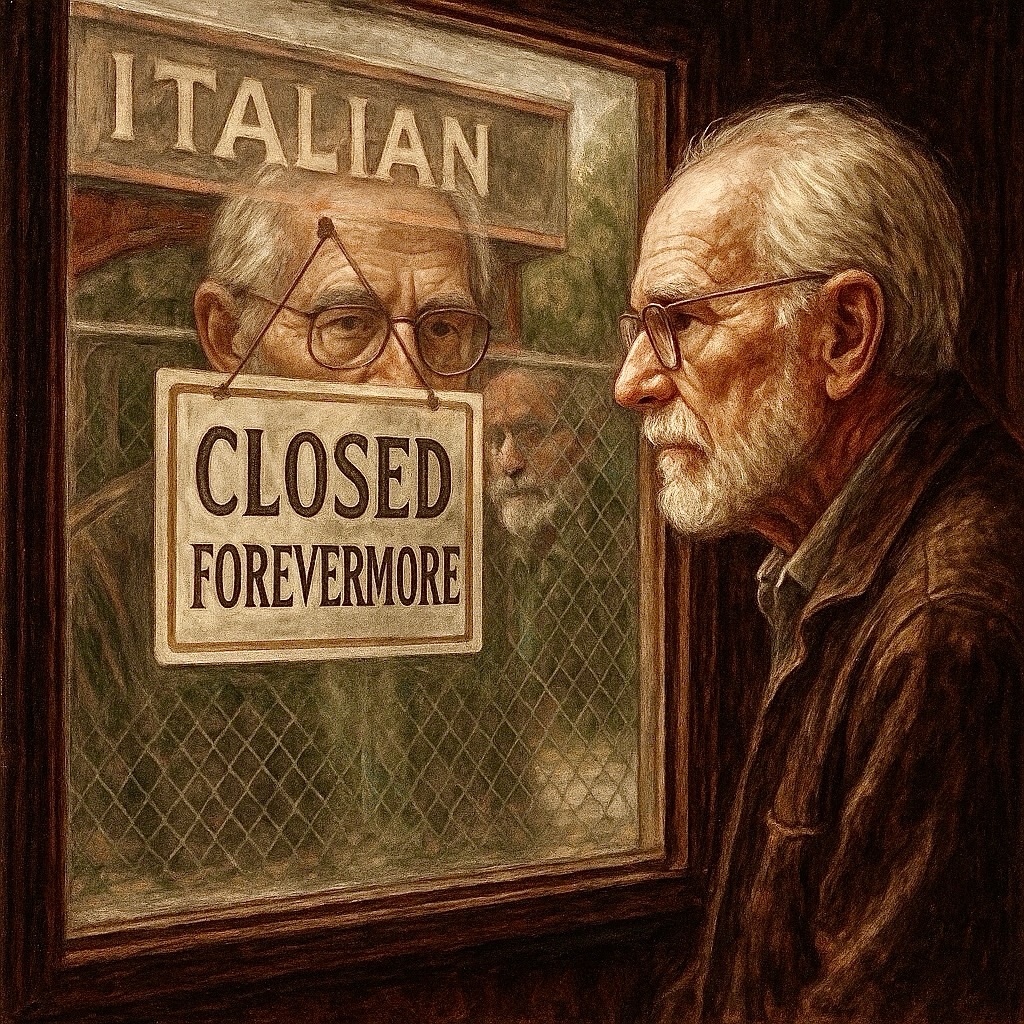
I drove past an Italian restaurant today, one that had stood for forty-six years. A fence now circles it, and plywood pressed against the windows. No warning. No farewell. Just gone.
It was a place my daughter loved, she adored the lasagna. We’d sit together in the warm hum of conversation, while celebrities of another era smiled down from the photo-lined hallway to the restrooms, their signatures fading but still proud.
The dining room was always alive with older couples lingering over wine, laughter woven into the glow of chandeliers, the comfort of leather booths, and the quiet dignity of dark wood. The popular palette of past times.
And now? Erased. Being replaced by another apartment complex in congested Santa Monica. History exchanged for “progress.” A casualty of greed, as so many iconic places are. The soul of community traded for corporate sameness, prepackaged meals, and fast-food neon.
As the band, America, a band from yesteryear, plays in my car, I find myself thinking about all the remarkable places that once gave shape to a this city, to a life, and how they vanish, one by one.
And maybe it stings more now because my only daughter, my middle child, has just moved across the country for college. The restaurant is gone. She is stepping into her own world. Progress.
And I remain, carrying the melancholy weight of change, tasting memory like a dish that can no longer be ordered.
In the end, it isn’t just a restaurant closing or a daughter leaving home, it’s the reminder that nothing stays the same. Places fade, children grow, and songs, once chart toppers, slip into oldies stations.
What remains is the love stitched into those memories: lasagna shared, laughter under chandeliers, singing songs together on a beautiful drive and the feeling of being one.
Progress may take the walls, but it can’t erase the moments that made them sacred.
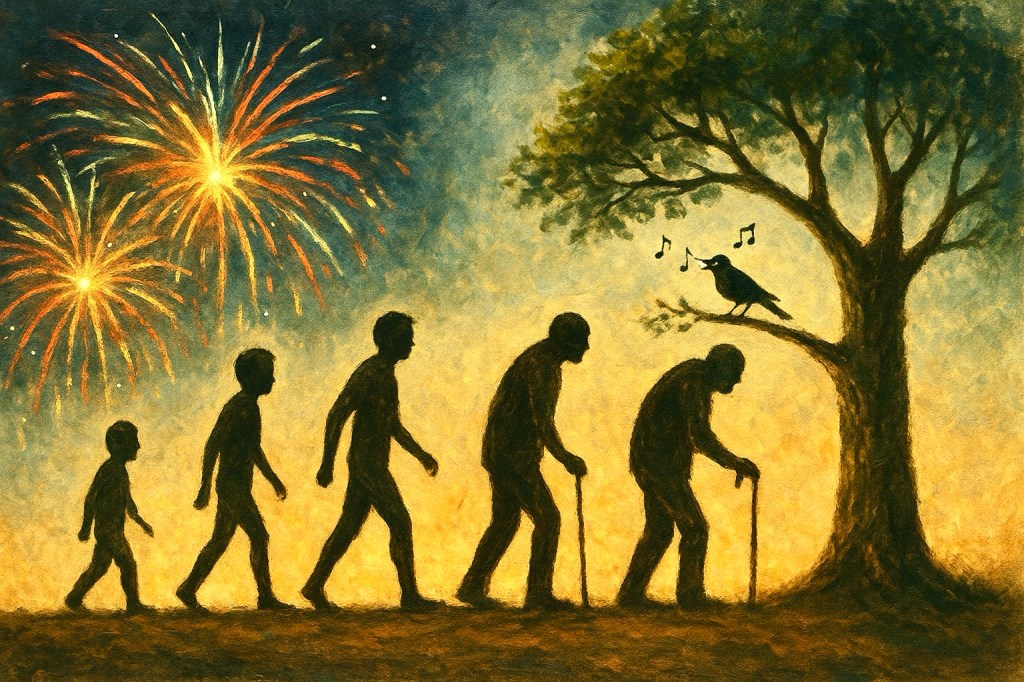
I am now the old man at the looking glass, watching memories fade yet flicker, realizing just how precious time has always been, then, now, and tomorrow. We take it for granted until it’s gone, like a beloved restaurant behind a fence, waiting for the backhoe. One day, I too will be enclosed, my own fence drawn, waiting for the backhoe.
Until then, I hold fast to the love, the laughter, and the fleeting beauty that make life worth remembering.
As the fine China and silverware gets auctioned off to the antiques store, plastic replaces and translates to a progress without soul.
Permanence is replaced with disposable, convenient, and forgettable.
As our bodies drift toward becoming plastic and our minds dissolve into the digital, I am thankful that I was born when I was, in a world still lit by chandeliers, warm incandescent bulbs by family tables and roll down windows in cars, before FM radio.
I’m simply glad I lived in a time before the disposable became the norm. My hope is that I’ve left enough of myself in my children, that they carry not only my stories but also the stubborn belief that some things, love, memory, and ritual, must remain untouched by progress.
Motion without purpose is only relevant until replaced, everything becomes a placeholder, waiting to be discarded for the next thing.