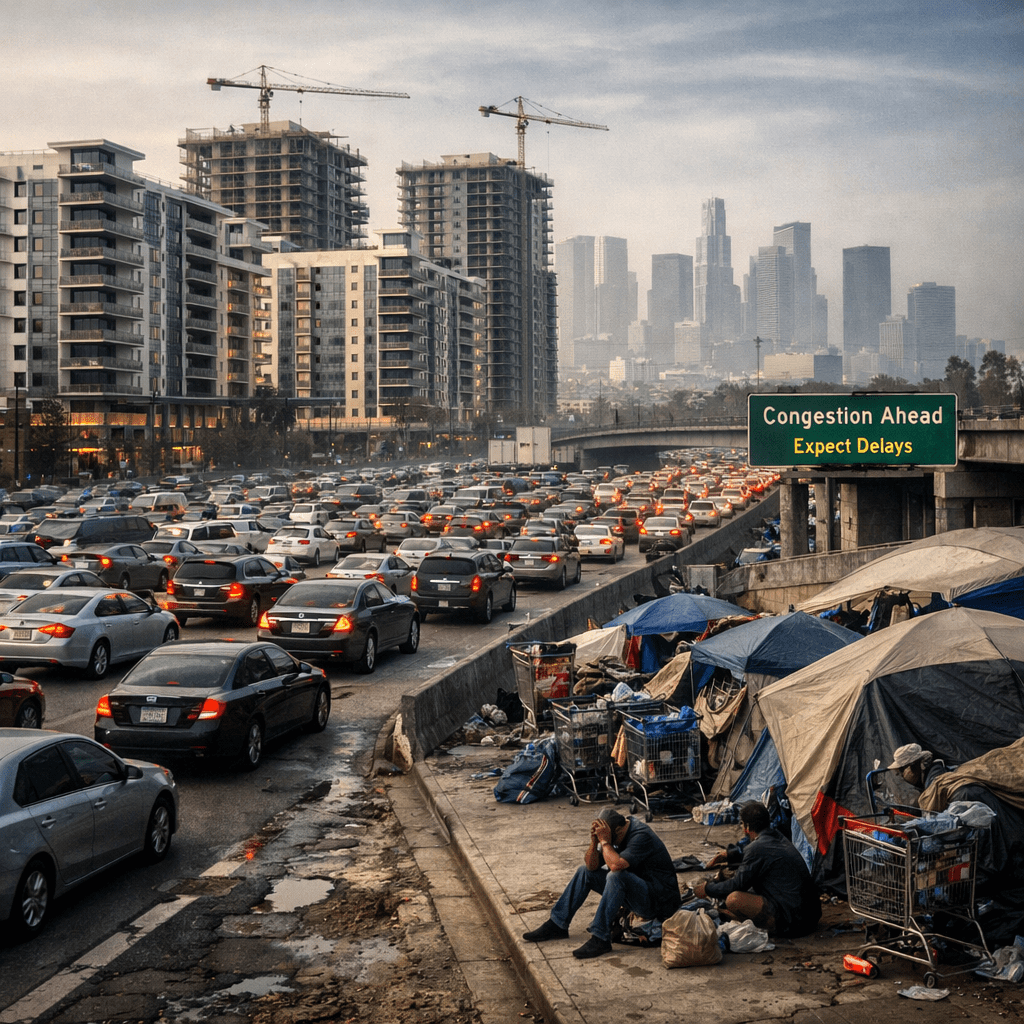
California continues to push new housing. Unaffordable apartment complexes are opening all over Los Angeles, yet the homeless population keeps growing.
The same old roads carry more and more people, but no meaningful road expansion or infrastructure improvement is happening. We keep building up, but we’re not building out, and the strain is starting to show.
We’re stacking bodies on broken systems.
Build up. Ignore the streets below.
Every year new taxes or higher taxes.
Since 1999, twenty-seven years, the state has ineffectively been run by three Democratic governors and one Republican who governed like a Democrat. One party has dominated the direction, the spending, the policy.
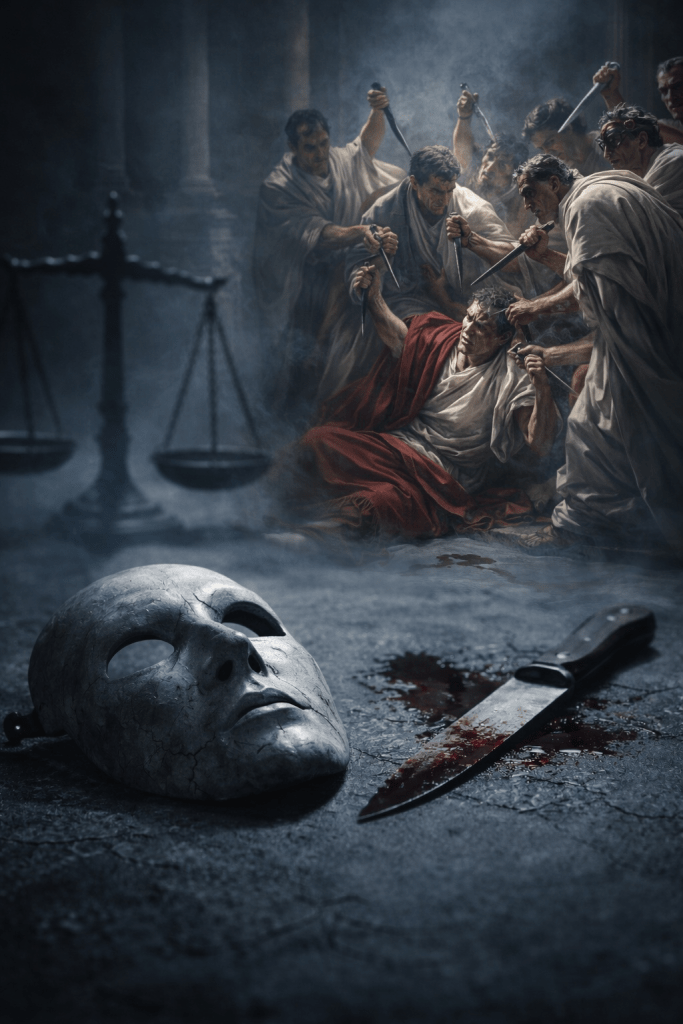
Narcissism loses its head to the blade it engineered.
I didn’t vote for Joe Biden, but I hoped he would do a good job.
I didn’t wake up every day rooting for him to fail, because if a president fails, the country pays the price. I didn’t suffer from some kind of political derangement, wishing harm or chaos on his administration just to feel validated.
I disagreed with many of his policies. I disagreed with the woke ideology surrounding him and the constant push of what felt like a manufactured collective narrative. I never wished for the country to decline. I never hoped American citizens would suffer just so I could say, “I told you so.”
Now I watch people consumed with the same mindset toward Trump, openly rooting for economic trouble, social unrest, or policy collapse just to prove their vote was right. Hoping tariffs backfire. Hoping crime narratives explode. Hoping the country stumbles so their side can feel vindicated.
That isn’t principle. That’s partisanship turned corrosive.
I have never wanted this country to fail under any president, not one, even when I strongly opposed their policies. Because once you start rooting against your own country to win a pink pussy hat, you’ve already lost something far more important.
And the constant stream of memes, cable news outrage, and social media hysteria only pushes me further away from the people who cheer it on.
There’s a difference between opposing policies and hoping for collapse.
At this stage of life, you’re not just looking for someone to pass time with, you’re looking for alignment. Chemistry. Shared rhythm. A sense of ease.
You scroll through profiles and see labels, pronouns, politics worn like uniforms. Sometimes you already know it’s not a fit before the first conversation even starts. You move on.
Then there’s the checklist culture, love to travel, love to eat out, love to shop. Nothing wrong with any of that. But if the lifestyle already reads like a recurring expense before the first date, you start asking yourself what the foundation really is.
What’s the most frustrating is when you finally meet someone and they don’t look like their pictures, not a little different, but ten years different. You don’t start a potential relationship on deception. That’s not a great foundation.
Chemistry matters. Attraction matters. Health matters. Wanting a companion who takes care of themselves the way you take care of yourself isn’t misogyny, it’s compatibility. I’m 60 years old, and most people guess I’m 45 or 50. That didn’t happen by accident.
And here’s the irony, aging can be beautiful. Confidence. Lines earned. Stories carried. There’s something powerful about authenticity.
At this point, it’s not about perfection.
It’s about honesty, health, chemistry, and shared values.
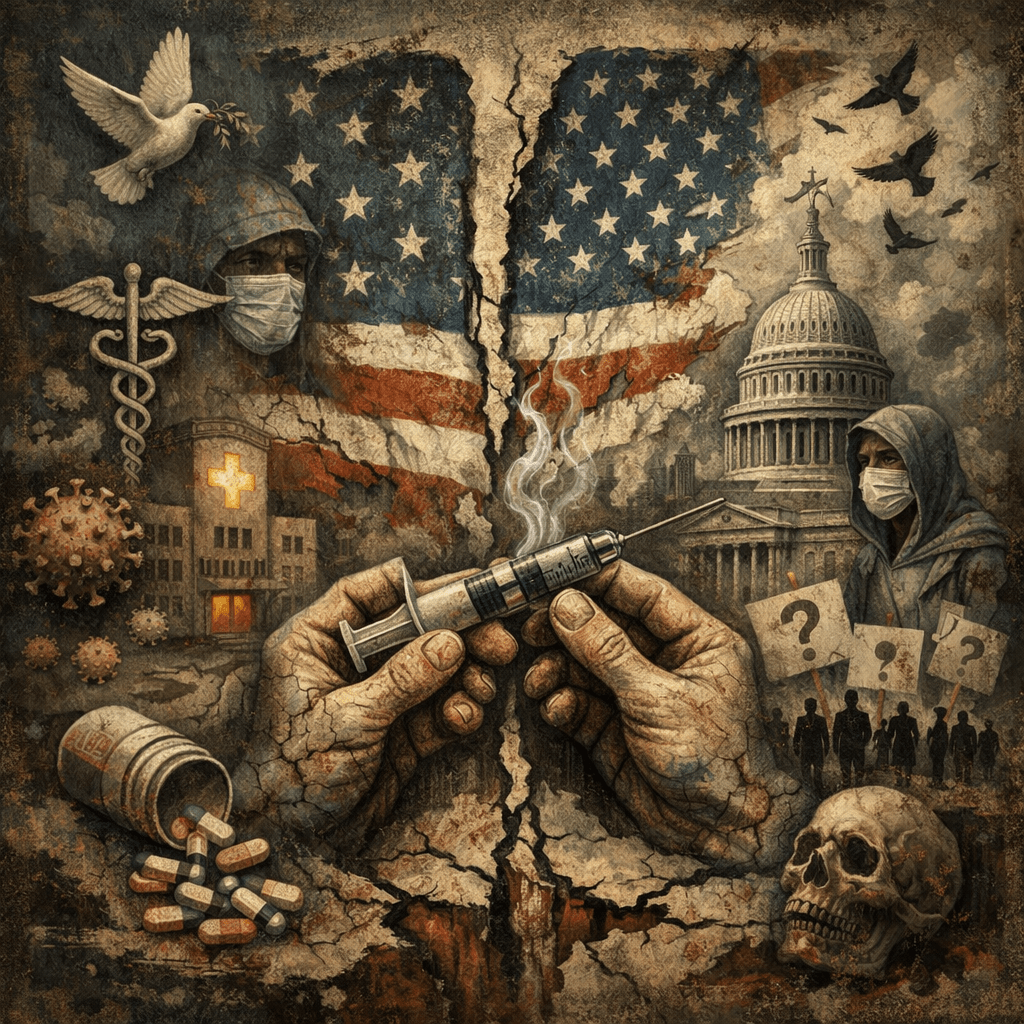
Operation Covid-19, the persuasion, and the modern crisis of trust.
At the start of COVID, many officials and media outlets emphasized an animal origin in a Wuhan wet market.
Later, some agencies said a laboratory origin was plausible.
And from that moment on, every message sounds less like guidance and more like managed messaging.
The point is what it did to trust.
Once certainty visibly changes, people don’t just question the answer, they question the authority that delivered it. And from that moment on, every message sounds less like guidance and more like a planned management.
The pandemic itself split perception immediately.
Many experienced it as a medical emergency requiring collective action.
Others saw it as an expansion of social control justified by fear.
The pandemic was a medical emergency.
It was also a psychological one.
Viruses infect lungs.
Uncertainty infects perception.
Many families saw loved ones moved quickly to ventilators, yet outcomes were often tragic.
During COVID, governments pushed compliance, institutions needed credibility, and populations needed explanation. Out of that collision came a debate that never fully resolved, not about masks or vaccines, but about influence.
People weren’t only asking what was happening, they were asking who was shaping policy and perception.
What many called “mass formation” isn’t a diagnosis. It’s a pattern humans repeat in uncertain times.
Isolation rises.
Anxiety floats without a target.
Frustration searches for meaning.
Then a narrative appears, one that names the danger and offers a path back to safety. The mind grabs it, not necessarily because it is false or true, but because it stabilizes chaos.
Disagreement stops feeling like debate and starts feeling like disruption.
Many people chose vaccination quickly, while others preferred to wait because the vaccines were new and unfamiliar.
In ordinary times people form opinions and communities follow.
In fearful times communities form certainty and people follow.
The comfort isn’t the conclusion, it’s the unity.
The science of steering gently.
Years before the pandemic, governments openly adopted behavioral economics, the idea that people don’t always decide rationally and systems can be designed to guide better choices.
Automatic enrollment instead of opt-in.
Reminder letters instead of penalties.
Simpler forms instead of dense ones.
They called it a “nudge.”
Supporters saw a humane administration. Critics saw invisible persuasion with an undercurrent of population control.
Both were deepening the divide.
Because the power of a nudge is not force, it is friction. Reduce friction toward one choice and human nature does the rest.
During COVID, messaging campaigns and behavioral strategies became central tools of public health. Whether that was responsible governance or psychological steering depended largely on whether one trusted the messenger.
Political rhetoric intensified the information conflict, and even experts disagreed.
During the pandemic, government officials communicated directly with major social media platforms and cable news networks and urged stronger limits on certain COVID-19 discussions.
To some, this was responsible crisis management in the middle of a public-health emergency.
To others, it was the government shaping the boundaries of permissible discussion.
Platform executives later testified under new political leadership, before Congress and in court proceedings that they were urged to limit or reduce the spread of certain posts and to elevate links from the Biden Administration, Dr. Anthony Fauci and CDC for official health guidance.
The disagreement wasn’t about whether contact occurred, it did, but whether the line between public safety and viewpoint control had been crossed.
From that moment on, the pandemic was no longer only fought in hospitals and laboratories, but inside moderation, social media, businesses, dashboards and recommendation algorithms.
Debates over speech extended to scientists themselves.
Dr. Robert Malone, an early researcher in mRNA technology, appeared on multiple podcasts where he raised cautions about vaccine effectiveness and side effects. Some interviews were later removed, labeled, or made harder to find across major platforms.
Supporters saw suppression of dissenting expertise. Others saw platforms limiting potentially harmful medical claims during a crisis.
Again, the disagreement was not about whether moderation occurred, but whether protecting public health had crossed into restricting legitimate scientific debate.
Trust already had cracks before the crisis began.
Public confidence was not at full strength when the crisis began.
Years earlier, corporate funding of certain public-health projects, such as Coke Cola’s involvement in research collaborations through a nonprofit partner supporting the CDC, had sparked debate about influence and framing the dangers of sugar and high fructose corn syrup.
Around the same period, news reports about members of Congress trading stocks in industries affected by government policy, including healthcare and pharmaceutical companies like those getting government money to create the vaccine, intensified public suspicion about conflicts of interest.
Whether legal, coincidental, or problematic, the perception alone widened distrust between citizens and institutions.
Perceptions continued to shift as events unfolded.
And in matters of persuasion, perception is oxygen.
Once people suspect influence, every message sounds intentional.
At the same time, a new infrastructure quietly expanded: 5G networks.
The rollout predated the pandemic but continued during it.
Two invisible things appeared together, a virus and a signal.
Towers that were also created in China.
To engineers, coincidence.
To many citizens, correlation.
The belief that lockdowns hid technological deployment spread quickly despite lack of scientific evidence. What mattered wasn’t the technical validity but psychological plausibility in an atmosphere already strained by lies fear and mistrust.
Humans rarely tolerate unexplained upheaval.
They construct meaning to regain control.
Politicians and news commentators preached:
Wear a mask, you don’t need a mask, wear a mask.
Stand six feet away.
If you get the vaccine, you won’t get Covid.
If you get the vaccine, you won’t spread Covid
If you get the vaccine, you won’t get it again.
Trust collapses when institutions speak with certainty and later revise.
So a pandemic arrived in a society primed by anxiety, guided by behavioral science, wary from past institutional relationships, and watching new infrastructure appear at the same time.
Authorities saw emergency management. Skeptics saw coordinated influence with a collective narrative.
The same reality, interpreted through different trust levels.
The effects were not only philosophical.
Children were kept out of classrooms for extended periods, education moved onto screens, and many students disengaged entirely. Academic progress slowed, social development fractured, and the consequences are still being measured years later.
People lost employment after refusing vaccination requirements, and businesses that had operated for decades in local communities closed their doors permanently after policies closed them for months.
Lockdowns shifted economic activity toward online commerce, concentrating unprecedented revenue in companies like Amazon that were positioned for at-home consumption.
The scale of government relief spending to households and businesses contributed to inflation pressures felt across everyday life.
Governments also purchased vaccines at massive scale using public funds, producing billions of dollars in revenue for pharmaceutical manufacturers such as Pfizer, Moderna, and Johnson & Johnson, further intensifying debate over public health necessity versus economic incentive.
High-profile commentators like Joe Rogan, who questioned aspects of pandemic policy often found the response moving beyond argument into character judgment. To supporters this looked like punishment for dissent; to critics it was accountability for influence. Either way, the discussion shifted from ideas to identity, and trust eroded further.
Policy was argued in press conferences,
but its weight was carried in living rooms. No middle ground was given.
What remained was a lesson older than medicine:
Public health depends not only on biology, but belief.
People will accept sacrifice if they trust intention.
They will resist guidance if they suspect manipulation.
Behavioral tools, collective psychology, and institutional credibility now live in the same space. The question is no longer whether leaders should communicate, but how transparently they should persuade. The challenge now is whether trust can be rebuilt.
In the end, nothing gained, nothing solved, and trust was never regained in the medical and political arena.
It was lost.
I was recently inspired to write this piece after hearing a Joe Rogan podcast with Dr. Robert Malone and seeing ongoing debate around newer COVID-19 data discussing possible inflammation and immune effects in some vaccinated individuals.
Rebuilding trust requires people to step back from political identity and celebrity influence, use common sense to consider competing information, and decide carefully what they accept and what they question.
Science takes time, and confidence grows only as evidence accumulates.
If someone who looks like you commits a crime and your first instinct is to defend them, you’re not moral, you’re afraid.
Afraid that their guilt stains you.
Afraid your identity can’t survive truth.
If someone commits a crime, the facts don’t change because of melanin, gender, ideology, or history.
I don’t carry other people’s sins.
I don’t need excuses dressed up as empathy, and I don’t rewrite reality to protect a demographic. I operate on personal responsibility, act wrong, own it.
As a Freemason, I respect the diversity of men within the fraternity.
But I don’t make excuses for corruption.
If a member violates our obligations, he should be expelled immediately. No pass because he is my Brother.
Brotherhood without accountability is rot.
What you call “standing up for your people” is just group survival instinct hijacking your conscience.





 Chu The Cud