As a child, I was always reaching for the next thing.
I learned to roll over, then crawl, then pull myself up, stand, walk, and eventually run.
Nobody had to tell me to strive.
Growth was instinctive.
I was always interested in what came next.
That continued throughout my life. I came to Los Angeles to pursue Hollywood, then stepped away from that career to raise my three children. For years, life gave me a reason to keep moving.
Then my children grew up.
The apartment became quieter, and I began thinking about what happens when the things that once gave your life momentum and resilience aren’t there anymore.
Maybe that’s when we’re vulnerable to the seduction of comfort.
We start looking backward.
I used to be stronger. Faster. More agile. I used to have more energy. My children used to be home.
But the past will always win that comparison.
So I’ve started asking a different question:
How do I fill the void left?
I may not be able to do everything I once did. That’s okay.
I can walk, write, create, learn and play music. I can explore.
I can still reach.
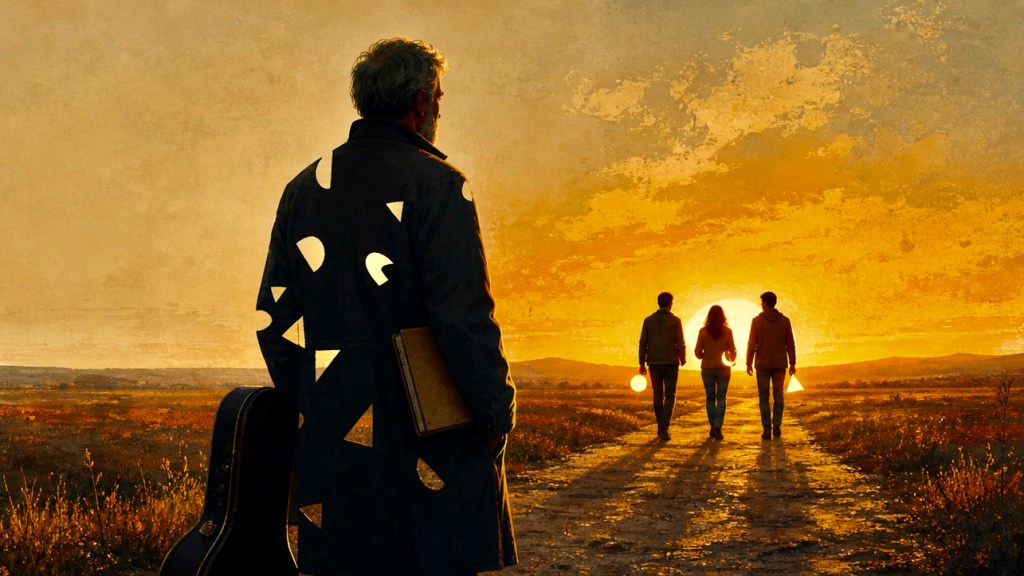
At sixty, maybe the goal isn’t to become who I was at twenty.
Maybe it’s to realize who I was and discover something worth becoming now.
Because as long as I’m still reaching for something beyond me, an experience once removed…
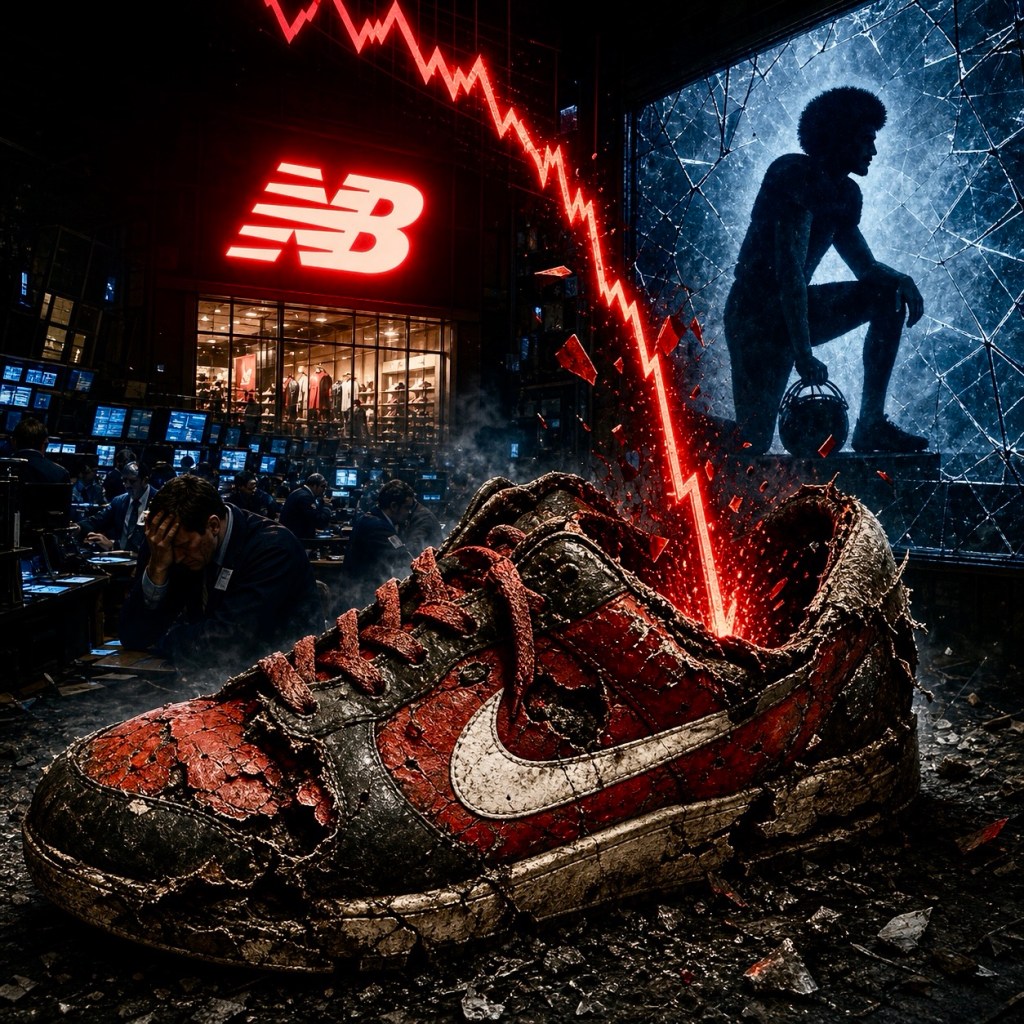
Nike Gets Booted From the S&P 100 After Losing Hundreds of Billions in Market Value.
Being removed from the S&P 100 is a significant warning sign, but it isn’t the same thing as being kicked out of the S&P 500.
Nike’s stock has suffered a massive decline from its 2021 peak.
Nike’s own 2026 annual report shows NKE down 63.55% over the five-year period through May 31, 2026, while the S&P 500 gained 93.80%.
Revenue peaked around $51.4 billion in fiscal 2024 before falling to $46.3 billion in 2025 and $46.4 billion in 2026.
Nike has faced stronger competition from brands such as Hoka, On and New Balance, weakness in China, and criticism of its product/retail strategy.
Sometimes a wound doesn’t heal and takes years to fester.
On the Colin Kaepernick controversy, Nike said:
“We would rather alienate some customers if it strengthens our relationship with younger, urban and culturally progressive consumers.”
Immediately after Nike announced Kaepernick as the face of its 2018 campaign, Morning Consult measured a dramatic deterioration in Nike’s favorability: its net favorability reportedly fell from +69 to +35. The backlash included people publicly destroying Nike merchandise and calls for boycotts.
Sometimes an injury doesn’t look serious when it happens. You walk away, the adrenaline wears off, and you think you’re fine.
Then, years later, you realize the injury never really healed.
That’s how I look at Nike and Colin Kaepernick.
I’m not arguing that Kaepernick immediately destroyed Nike. Quite the opposite, the campaign initially helped Nike. Sales went up, the brand received enormous attention, and Nike appeared to have made a very successful marketing decision.
But maybe we’re looking at the wrong timeline.
What if Kaepernick was the injury, not the immediate cause of death, but the beginning of a wound that Nike never recognized?
Nike had spent generations becoming one of the most recognizable brands in America. Then it took a very public political and cultural position.
Some consumers loved it.
Others didn’t.
And some of those people may have simply walked away.
The younger generation eventually moved toward newer brands like Hoka, On and New Balance. Meanwhile, some of the older generation who had grown up wearing Nike may have stopped identifying with the brand after Kaepernick, and never came back.
That’s the part we can’t easily measure.
You can’t look at a balance sheet and find a line that says:
“Customers we permanently alienated in 2018.”
But losing a customer isn’t always an immediate event. Sometimes it’s a slow leak.
A customer doesn’t boycott you. They simply buy something else next time.
Then again.
And again.
Until one day you look around and realize an entire generation has moved on.
So no, I wouldn’t say Colin Kaepernick “killed Nike.”
I’d say something more provocative:
Kaepernick may have given Nike an injury that didn’t look fatal at first, but over time, the wound may have contributed to the brand losing customers it never got back.
And perhaps Nike’s biggest mistake wasn’t taking a political position.
It was underestimating how long the consequences of that position might last.
My son James is living in Fort Worth, Texas, going to school, working almost full-time, living on his own, and doing everything he can to become a contributing member of society.
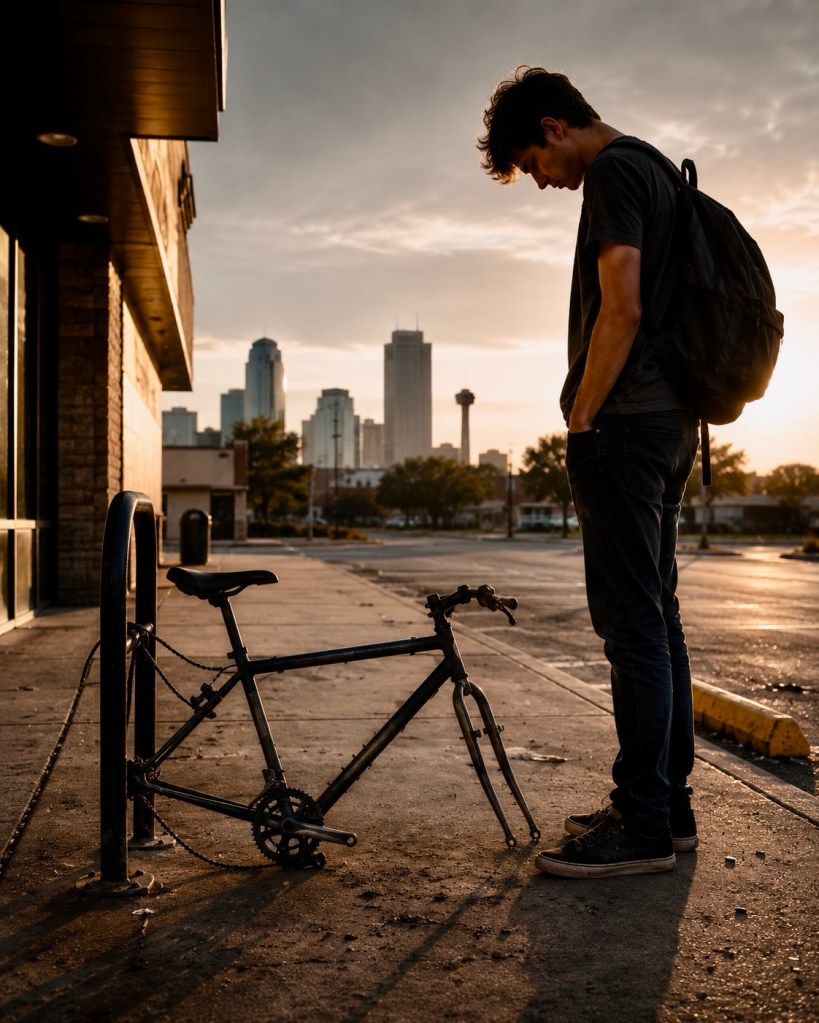
He was given a broken bicycle, and because it was his only real means of transportation, he spent about $100 buying tubes and fixing it up. He rides that bike in the brutal Texas heat to school, to work, to the supermarket, and everywhere else he needs to go.
Today, he rode it to the store to pick up some index cards for one of his classes. He locked it up, went inside, and when he came back out, both wheels were gone.
He called the police and filed a report. People reportedly saw a homeless man removing the wheels from his bicycle.
Think about that for a moment.
Here’s a young man going to school full-time, working nearly full-time, living independently, paying his way, and trying like hell to build a future for himself. His transportation is a pedal bike because that’s what he can afford.
And some pos walks up and simply takes the wheels off it.
Now James has no transportation unless he somehow finds the money to replace the wheels, tires, tubes and everything else, which he doesn’t have.
And this isn’t the first time my family has dealt with something like this.
A couple of years ago, my daughter was assaulted by a homeless man at a pizza restaurant. He grabbed her breasts. She was shocked and traumatized by what happened. She went to the police and reported it.
And from what we were told, there wasn’t much they could do under the circumstances.
So forgive me if I’m angry.
This isn’t about hating homeless people. Being homeless doesn’t automatically make someone a bad person. There are people on the streets who are struggling with poverty, addiction, mental illness and circumstances beyond their control who deserve compassion and help.
But compassion cannot mean abandoning the victims.
When someone steals from my son, or sexually assaults my daughter, I don’t care what their circumstances are, I care about what happened to my children.
My son isn’t sitting around waiting for someone else to take care of him. He’s going to school. He’s working. He’s living on his own. He’s trying to build something for himself.
My daughter was simply going about her life when someone violated her.
And now my son is simply trying to get through school and work when someone takes the wheels off the only transportation he has.
That’s what makes me angry.
And what breaks my heart, I can’t be there for him.
We can have compassion for people who are homeless and expect accountability when someone commits a crime.
Those two things aren’t mutually exclusive.
Because here’s the part that seems to get lost in all the political arguments:
The people trying to do the right thing shouldn’t become collateral damage in our failure to deal with the people who aren’t.
James doesn’t need excuses made for whoever stole his wheels.
History keeps returning to the same uncomfortable image: a civilization’s elite, cards or dice in hand, gambling away the discipline that once made them formidable.
Historians understand that gambling alone didn’t toppled a great power. Rome, France, Britain, in every case, the real killers were war debt, fiscal mismanagement, inequality, and institutional rot.
Sound Familiar?
But the gambling anecdotes are worth sitting with, because they capture something sharper than statistics ever could: a ruling class that had stopped taking its own survival seriously.
In fourth-century Rome, the historian Ammianus Marcellinus blamed the empire’s obsession with dice and chariot-race betting for the fact that “nothing memorable or serious” was getting done in the capital anymore. Caligula pushed the indulgence to its logical extreme, running out of cash mid-game, he simply demanded the tax rolls of Gaul, ordered its wealthiest men killed, and returned to the table boasting he’d “come into one hundred and fifty million.” Governance had become an extension of the game.
Eighteen centuries later, Marie Antoinette earned the nickname “Madame Deficit” for gambling away fortunes at the exact moment the French crown’s war debts were bankrupting the treasury. The Revolution didn’t even end the habit, it just moved venues.
Meanwhile in Britain, the future King George IV lost nearly 500,000 pounds at cards within two years of adulthood, debts so ruinous he agreed to marry Caroline of Brunswick specifically because Parliament would clear them as part of the deal (Victorian London).
In every case, the gambling wasn’t the disease. It was the fever that made the disease visible. Which is what makes today different, and worth watching closely. Gambling isn’t lurking at the margins of culture anymore, it’s being built into the institutions that produce it.
Online sportsbooks are no longer just advertising during games; they’re partnering with the leagues, the franchises, and increasingly the ownership groups that run them. The line between the people selling us the game and the people profiting from our bets on it has started to disappear.
That raises a question no emperor ever had to answer, because no emperor’s court owned the arena: when the institutions producing the entertainment also profit from the wagering around it, where does the game end and the bet begin?
History says gambling alone won’t destroy a civilization, Rome’s dice tables, Versailles’ card rooms, and Crockford’s gaming hell all prove the point. But it has always been a remarkably accurate symptom of a system that has stopped policing its own excess.
The real risk today isn’t a society of degenerate gamblers. It’s a commercial machine, media, leagues, franchises, and sportsbooks alike, that has found it more profitable to keep the wheel spinning than to ask who’s left standing when it stops.
So maybe the better question isn’t why people are gambling so much. It’s who’s getting rich by convincing them to.
Today’s social-media health sphere is overflowing with supplements by self-appointed gurus pushing the latest miracle formula, their own special brand of “Dr. Charlatan” medicine. Every six months, a new pill, powder, capsule, or injectable arrives in the longevity market promising to keep us younger, healthier, sharper, leaner, and somehow closer to immortal.
And we buy in.
We spend hundreds of dollars chasing the newest breakthrough, only to realize months later that we have been sold another version of the placebo: longevity in a bottle. No movement required. No discipline. No changes to the way we eat, sleep, think, or live. Just swallow, wait, and apparently wake up ten years younger.
Then comes the disappointing realization: We see a new wrinkle and feel exactly the same as we did before.
Maybe it is time to ask ourselves a simple question: Have we forgotten that there is no shortcut to a healthy life?
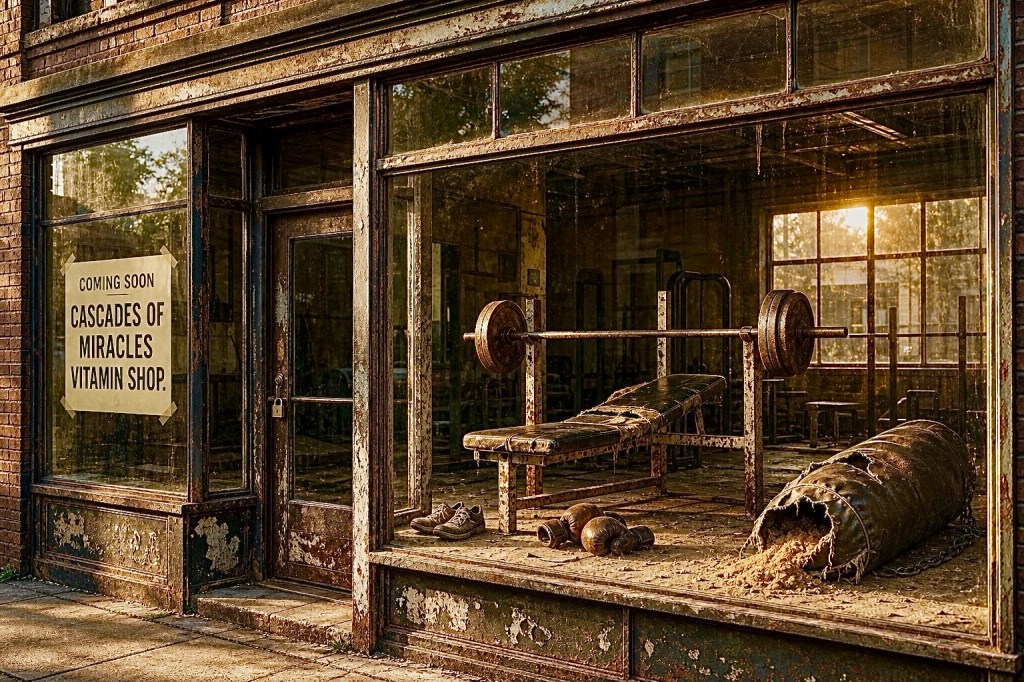
We complain when organic, free-range, healthy fresh food costs one dollar more, yet walk into Vitamin Shoppe, GNC, or another modern supplement emporium and happily drop hundreds on bottles filled mostly with promises.
We put sunscreen on our skin to protect ourselves from the sun, but forget that sunlight is also one of the body’s natural sources of vitamin D, an essential nutrient tied to overall health and sunscreen blocks that vitamin D.
Then there is dinner.
Instead of walking into a supermarket or around a farmers market, buying fresh ingredients and cooking at home, we open an app, tap a few buttons, pay a delivery fee, add a service charge, leave a tip, and wait for someone to bring us food we could have picked up ourselves, or made ourselves, for a fraction of the price, while getting exercise from walking in a store to buy it and preparing it ourselves creating movement.
Somewhere along the way, we turned health into a subscription service.
The real longevity breakthrough may not be hiding in the next bottle on the shelf. It may have been sitting in the produce aisle the whole time with a daily walk in the sunshine.
Eat real food. Move your body. Get enough sleep. Spend time outside.
Stop sitting so much.
Build habits you can maintain. Stop searching for a magic pill. Because if staying healthy were really as simple as swallowing a capsule, we would all be 25 forever.
And someone would have bottled it already, with movement not necessary.
Today, I celebrate, and a piece of me quietly grieves. The part of fatherhood that once felt so necessary, so full of purpose: the daily task of raising him.
There’s an inevitable ache that comes when your son’s wings have finally grown strong enough to leave the nest and make his own way in the world.
A test to himself.
Every feather on those wings carries something I gave him, a lesson, a sacrifice, a moment that helped prepare him to fly. Strength. Wisdom. Love and the courage to leave.
Knowing all of that is true, doesn’t make the letting go any easier.
As the son flies, the old man cries, a piece of him is missing.
It doesn’t take sides. It doesn’t lie. It doesn’t seek applause or fear criticism. It simply is.
A sunrise doesn’t change because of who is watching. Gravity doesn’t suspend itself for ideology. Time doesn’t pause or rewind for grief, nor does it accelerate for gain. Reality remains indifferent to our opinions, our emotions, and the narratives we construct around it.
Innocence does not create victimhood, because consequences are not identities. They are experiences to be endured, learned from, and, when possible, overcome. They define us only if we choose to let them.
The death of a flower that will bloom again reminds me of a beautiful ballad once sung by a voice that is no longer with us. Though the flower fades, the bees carry its pollen on invisible currents, ensuring that its beauty returns with another season. So too does music travel on unseen vibrations, carried through the air, from ear to heart, from one generation to the next.
The singer may be gone, but the song continues to bloom. Every note awakens the memory of the first time it was heard, the place we were, the people beside us, the emotions that became forever intertwined with its melody. The flower lives again because the bees carry its pollen. The song lives again because its vibrations continue to carry the soul of the artist long after the voice has fallen silent.
Nature and music obey the same quiet law: life changes form, but beauty finds a way to return.
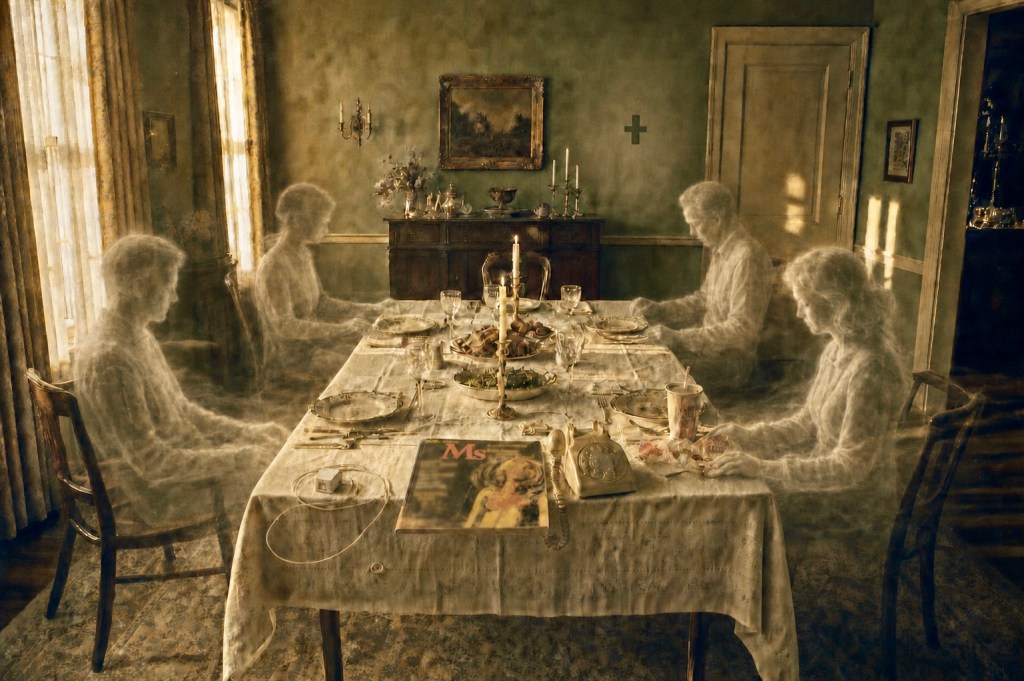
Something changed in American family life over the last sixty plus years. In 1960, the typical woman married by 20 and most children grew up with two married parents at the dinner table most nights. Today, the median age at first marriage is nearly 29, a quarter of 40-year-olds have never married, and the birth rate has fallen by more than half. The nuclear family, married parents, shared meals, a household built around one another’s presence, has become less the norm and more the exception.
I want to walk through several forces that I believe explain a meaningful part of that shift, while being upfront about where the evidence is solid and where it’s shakier.
First, modern feminism and the economic independence it opened up for women changed the calculus of marriage itself, when both partners can support themselves, the old economic reasons to stay together carry less weight.
Second, there’s the more delicate subject of intelligence-agency influence on American culture. It’s a documented historical fact that the CIA funded magazines, art movements, and even had early ties to prominent feminist figures during the Cold War. What’s far less certain, and where I want to be careful, is the claim that any of this was a deliberate plan to dismantle the family. Was it an exercise in social engineering?
The Cold War revealed that governments understood the power of culture as a battlefield. The CIA did engage in cultural influence operations, like MK Ultra along with supporting publications, intellectual movements, and artistic efforts to shape public opinion. The larger question is not whether influence existed, it did, but how much of America’s later cultural transformation was the result of deliberate design versus unintended consequences of broader social and economic changes.
That’s a real debate, not a settled fact, and I’ll treat it that way.
Third, the fast-food industry normalized convenience over togetherness, replacing the family dinner table with meals eaten alone, in cars, or on the go. the sharpest family-dinner decline happened specifically from the mid-1970s to early 1990s, then leveled off, even as fast-food spending kept climbing for another 30 years.
The decline of the family dinner and the rise of fast food were not separate trends; they were two sides of the same cultural shift. As families became more fragmented and shared meals became less common, the fast-food industry expanded to meet a new demand, a society increasingly organized around speed, convenience, and individual choice rather than collective rituals.
Fourth, computers and digital technology also transformed how families spend time together. Instead of one shared experience, watching the same program, going to the theater, or gathering around a common activity, family members can now occupy the same room while living in separate digital worlds.
But the story doesn’t stop there, and a fair examination has to bring in a few other threads.
Religion has retreated sharply from American life, weekly church attendance has fallen from over 40% a generation ago to roughly 30% today, and for most of history, religious community was one of the strongest institutional supports holding marriages and families together. As that support faded, so did some of the social pressure and structure that kept families intact.
Law changed too. Starting with California in 1969, states adopted “no-fault” divorce, making it dramatically easier to end a marriage without proving wrongdoing. Economists still argue about exactly how much this mattered, but it removed a real legal barrier that used to keep unhappy marriages together.
Welfare policy is part of this conversation as well. Some economists and social critics have argued that certain benefit programs unintentionally penalized marriage among lower-income families, a mother could lose support by marrying a man with even a modest income. That claim is contested, but the underlying incentive was real.
And underneath much of this sits economics. As manufacturing jobs disappeared and wages stagnated for men without a college degree, many became less able to support a family the way a generation earlier could on a single income. Some of the most rigorous research on this whole topic points to that economic squeeze, not any single cultural cause, as the strongest, most measurable driver of family decline.
None of these forces acted alone. They overlapped, reinforced each other, and arrived roughly together over the same fifty years. The honest story isn’t that one thing broke the family, it’s that several forces pulled in the same direction at once, and it’s worth understanding each of them clearly rather than picking just one villain.
It was a collision of converging forces, the harvest of seeds planted long before their consequences became visible.
Perhaps the final irony is that we traded many of our shared rituals for convenience, and advertisers convinced us that progress could be measured in consumption, speed, and a little chicken feed.
I met you where you were and never judged where you came from. I encouraged you to pursue an education, introduced you to people who valued ideas and ambition, and opened doors that had never been opened to you. I shared my world because I believed in your potential.
When you had little, I gave what I could. I treated you with respect and dignity, not because they had to be earned, but because everyone deserves them. I supported your dreams as if they were my own and celebrated your successes without keeping score.
When our children were born, I made a choice. I left my career so they could be raised by a parent instead of strangers. Those years were never a sacrifice to me; they were an investment in the people I loved most.
Life, however, does not guarantee that devotion will be returned.
Our union ended. You chose a different path, and with that choice came the loss of the life I believed we would share forever. I no longer woke up to my children every morning or tucked them into bed every night. That absence became the greatest cost.
Today, you live with the rewards of a successful career, financial security, and a comfortable home. I face a different reality, one of rebuilding, living modestly, and carrying the quiet weight of starting over later in life.
I don’t regret what I gave. I regret only that what I believed you said, wasn’t manipulation.
I cannot change the past. I can only choose the man I am and make the best life I can without the world I helped build in the past.